Home > Archives for alexandrucoanda
Categories
Blog

Redefining Medical Micro-Automation: Live from the Automate Show 

01. Redefining Medical Micro-Automation: Live from the Automate Show

In highly regulated industries like medical devices, life sciences, aerospace, and defense, there is zero room for error. Components are shrinking, tolerances are tightening, and traditional automation systems are often too bulky or imprecise to keep up.

At the recent Automate Show, Mecademic joined forces with Seymour Advanced Technologies (SAT) and LMI Technologies to demonstrate how modern micro-automation is turning impossible assembly tasks into reliable, high-yield production realities.

Watch the live interview and demonstration below, and read on to see how this sub-millimeter system works.

Video

The Challenge: The 1-Thou Clearance Barrier

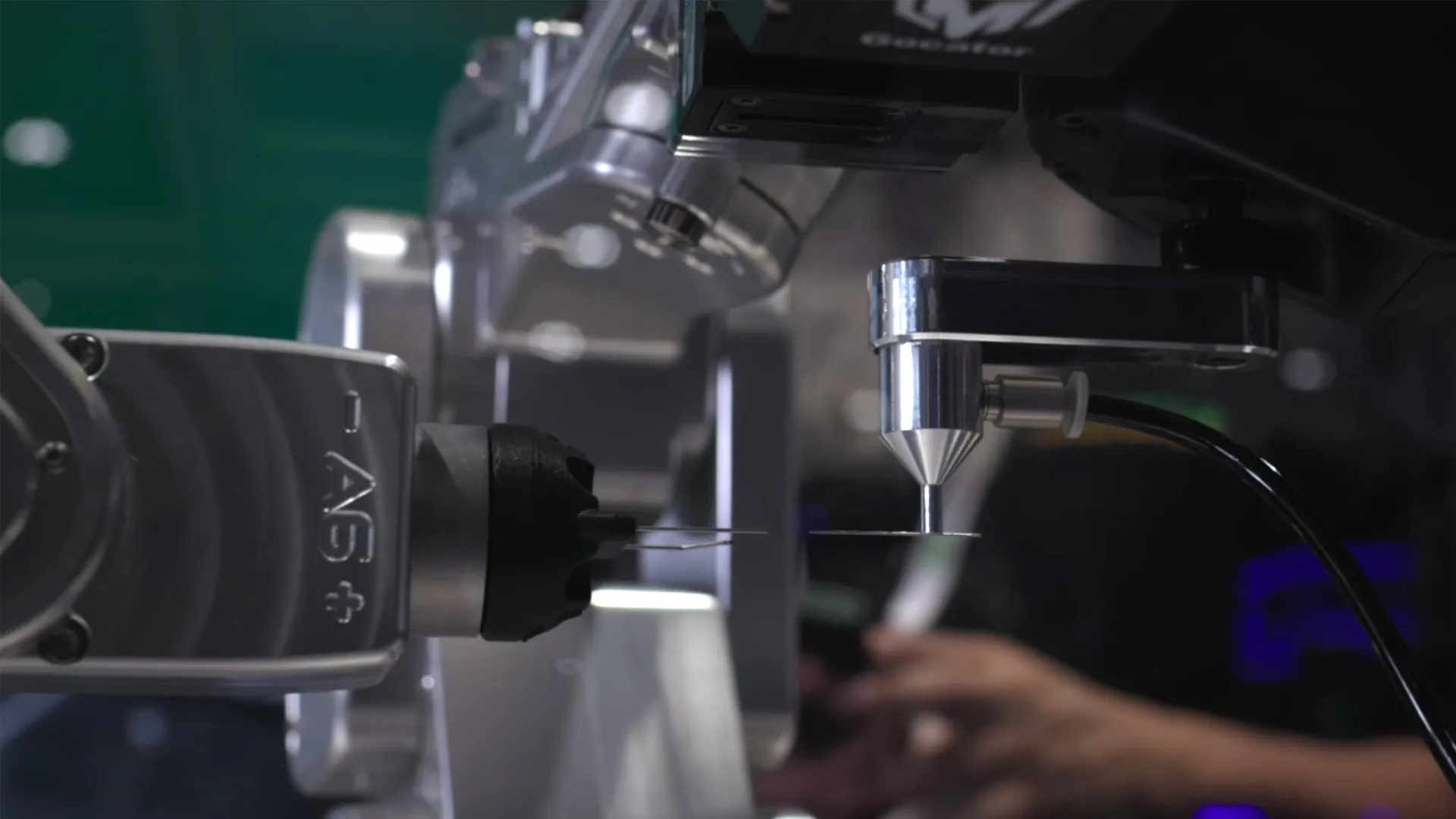
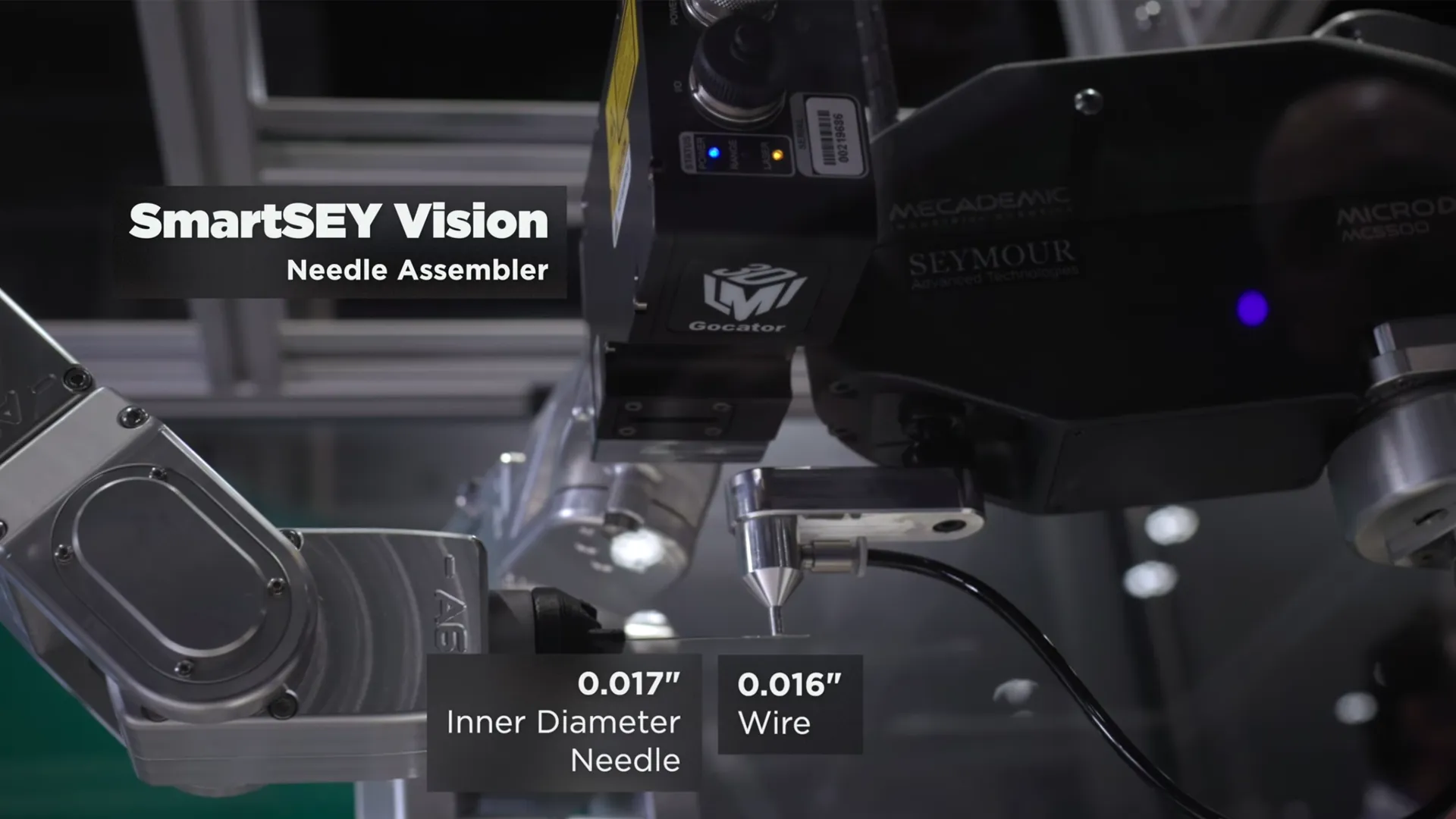
To showcase the system’s capabilities, SAT designed a demo to solve a notorious manufacturing headache: inserting a 0.016-inch (0.406mm) wire into a needle with a 0.017-inch (0.431mm) inner diameter.

With only 0.001 inches (25 microns) of total clearance, any slight misalignment or vibration will instantly bend the wire or damage the needle, resulting in immediate scrap.

Inside the Technology

“We make the smallest and most precise robots in the world.[…] the robots have 5 micron repeatability, and the resolution is about one micron. We work with very tiny parts in very high-precision industries”
— Stan Gleizer, Director of Strategic Partnerships at Mecademic
Step-by-Step: How the SmartSEY Vision System Solves It

During the live interview at our Automate Show booth, the partners broke down the five crucial steps of this automated process:

1. Locate & Pick
An Asycube feeder vibrates to singulate the needles, while an overhead 2D camera identifies their coordinates. The Mecademic MCS500 SCARA robot—the world’s most precise SCARA—moves in with a vacuum gripper to pick the needle.

2. Quality Inspection & 3D Scanning
Before assembly, the MCS500 presents the needle, and the Meca500 6-axis robot presents the wire, under an LMI Gocator 2618 3D smart blue laser scanner. Before needle presentation, the system performs an initial scan to detect wire defects. If the primary wire is out of specification, it is rejected in favor of the secondary wire, ensuring only an intact wire is positioned for Meca 500 insertion.

3. Vision Alignment in 6DoF
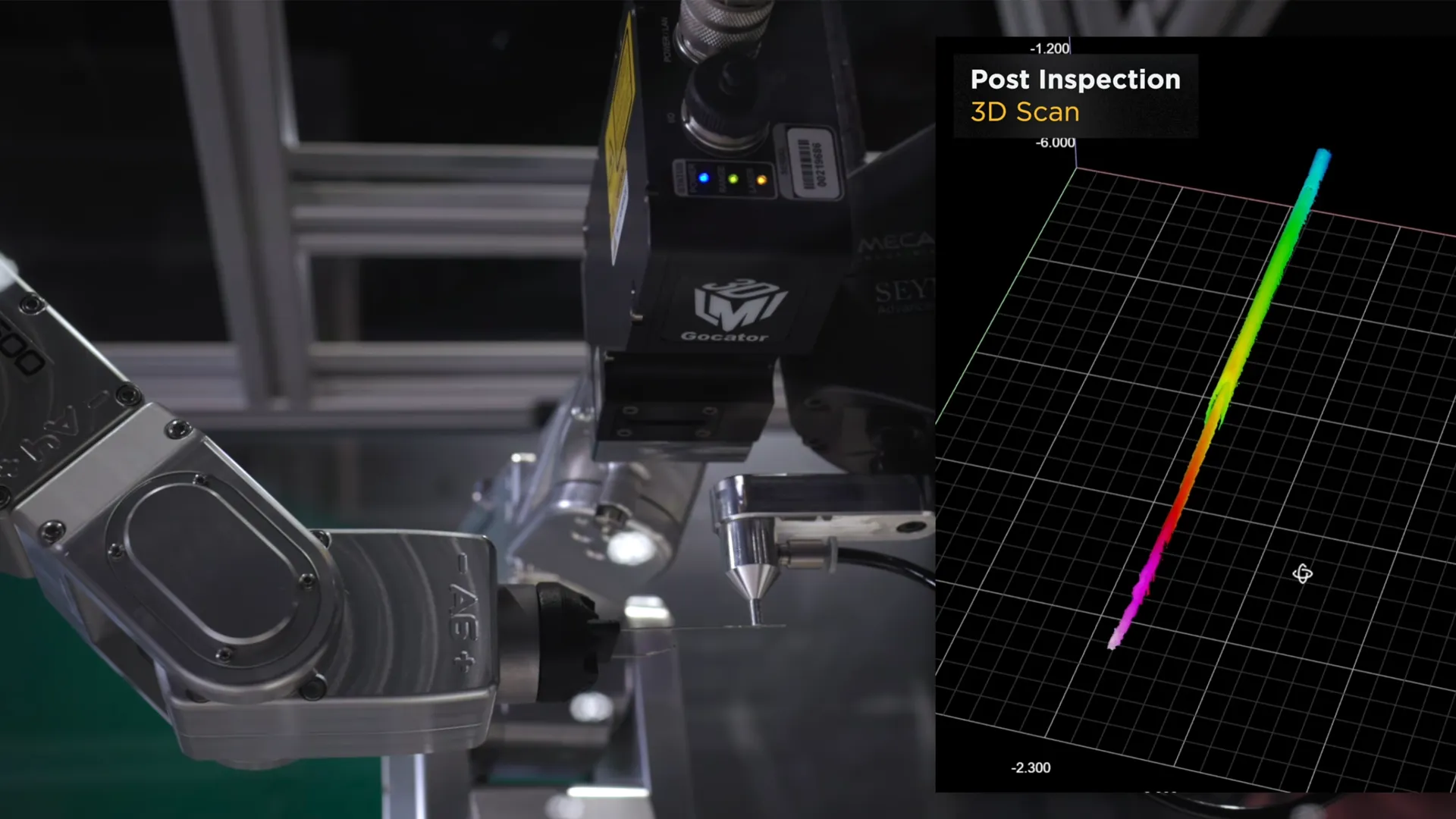
Using LMI’s GoPxL software, the system generates a dense, high-resolution 3D point cloud. It calculates a 6-Degrees-of-Freedom (6DoF) offset to determine the exact spatial relationship between the wire tip and the needle opening.

4. Precision Insertion
With the exact coordinates locked in, the Meca500 and MCS500 execute the insertion. Thanks to Mecademic’s 5-micron repeatability and 1-micron resolution, the wire slides perfectly into the needle. The motion is so precise that the needle does not even budge during insertion.

5. Post-Inspection & QA Reporting
Once inserted, the Gocator scanner performs a final 3D scan to verify the insertion depth and angle. All data is compiled into a detailed Statistical Process Control (SPC) quality report, ensuring 100% validation of the batch.

Redefining Micro-Automation: The New Standard for Medical Manufacturing

What this live demonstration at the Automate Show proves is that micro-automation is no longer just about smaller robots; it is about a fully integrated, zero-compromise ecosystem.

For decades, medical device manufacturers have accepted a frustrating status quo: as life-saving components have shrunk, the risk of assembly failure has skyrocketed. Traditional automation, with its bulky external controllers and rigid programming, simply couldn’t fit in cleanrooms or meet sub-millimeter tolerances without generating costly scrap. Together, Mecademic, Seymour Advanced Technologies, and LMI Technologies have shattered this limitation. By inserting a 16-thou wire into a 17-thou needle with absolute repeatability, we didn’t just execute a complex demo; we unlocked a new era of high-yield, 100% validated medical manufacturing.
This is what modern micro-automation actually looks like. It is an ecosystem where ultra-precise hardware and advanced 3D vision don’t just sit next to each other they communicate seamlessly through an open architecture to correct spatial paths in 6DoF on the fly. It is a system so compact and elegant that the entire robotic control is embedded directly into the base, eliminating bulky cabinets and maximizing valuable floor space. And most importantly, it is a process so precise, operating down to the single micron, that components mate perfectly without the host needle even budging.


Ultimately, this collaboration proves that when you eliminate the friction between vision, integration, and robotics, the “impossible” becomes a reliable daily standard. For industries where there is zero room for error and assemblies go directly into patients, we aren’t just shrinking automation. We are redefining it to ensure that the future of medical technology is built to never fail.

Bring Micro-Precision to Your Factory Floor

If you missed us at the Automate Show, you can still watch the full demonstration and partner interviews in action. Discover how micro-robotics and advanced 3D vision can safeguard your assembly lines against costly failures.

Watch the Application in Motion: 5-Micron Precision Micro-Assembly for Medical Applications

Ready to discuss your next high-precision project?

Categories
Blog

Mecademic Secures Strategic Funding to Drive Global Expansion

MONTREAL, February 18, 2026

Mecademic Inc., a leader in compact, high-precision industrial robotics, has raised $21 million CAD (approx. $15.3 million USD). This investment was led by Investissement Québec (IQ), with additional participation from Export Development Canada (EDC) and the Business Development Bank of Canada (BDC).

Strategic Growth and Global Reach

 “We are entering a period of rapid growth for automation,” said Philippe Beaulieu, CEO of Mecademic. “This funding allows us to expand our product line, strengthen our global presence, and continue leading in micro-automation. We are proud to support the world’s most prestigious brands wherever they operate.”

The capital will drive product innovation and international scaling, while also funding a new headquarters to meet surging global demand. This expansion follows a period of robust performance, during which Mecademic has consistently outpaced the industry average. The company plans to leverage this momentum by investing heavily in the U.S., European, and Asia-Pacific markets.

Precision Automation for High-Tech Sectors

 “Mecademic is a key Quebec-based leader in precision automation,” said Bicha Ngo, President and CEO of Investissement Québec. “Our investment supports their international expansion, helps scale production, and strengthens their governance as they enter this next growth phase.”

Demand for Mecademic’s micro-automation solutions is rising in sectors like electronics, optics, medical devices, and biotechnology. Its ultra-compact robotic arms allow manufacturers and labs to integrate high-speed, precise automation into confined spaces where traditional robots cannot fit.

Strengthened Leadership

Since 2022, Mecademic has transitioned into a growth-focused global organization. Governance has been reinforced with the appointment of Dominique Jodoin as Chairman of the Board and David Massé as CFO, who brings extensive strategic finance experience. The founding team continues to lead core operations:

  • Jonathan Coulombe (CTO): Technological innovation.
  • Éric Boutet (VP R&D): Product development.
  • Philippe Jacome (COO): Global operations.
  • Ilian Bonev: Senior robotics advisor.

About Mecademic

Based in Montreal, Canada, Mecademic designs and builds the world’s most compact and precise industrial robots. With an open architecture and standard-compliant design, Mecademic’s robotic arms enable manufacturers and machine builders to automate complex processes in tight spaces without sacrificing performance or reliability.

Categories
Blog Event Recaps

The 2026 Outlook: How Microautomation is Redefining Medical Manufacturing

As we close out 2025, I have been reflecting on the conversations I had at ADM Toronto. The energy on the floor confirmed a distinct shift in our industry. We are no longer just talking about automating standard tasks; we are entering an era in which processes once considered impossible to automate, due to complexity or microscopic scale, are becoming the new standard for automation. Looking ahead to 2026, the medical device sector is poised for significant evolution. The focus is shifting from simply “making it work” to making it smaller, more innovative, and more efficient. For manufacturers and integrators, the path forward lies in high-precision, micron-level microautomation. Here are the four key trends that will shape engineering decisions in the coming year.

1. The Design Revolution: Beyond the Gantry

For years, the default solution for precision automation was the Cartesian system or linear gantry. But as we move into 2026, that architecture is being challenged. The trend is a decisive shift toward ultra-compact, six-axis, and SCARA industrial robots, replacing traditional systems.

This isn’t just an aesthetic choice; it is a strategic engineering decision. Shifting to compact robotic arms allows machine builders to:

  • Simplify Architecture: Reduce the number of mechanical parts required to build a machine, also reducing costs
  • Maximize Cleanroom Real Estate: Save critical space by eliminating bulky gantries.
  • Increase Flexibility: Gain six degrees of freedom for complex manipulations that linear systems simply cannot execute.

Moving forward, the most competitive machine designs will be those that achieve high precision with the smallest possible footprint.

2. Practical AI: Optimizing the "Invisible" Tasks

Artificial Intelligence is often discussed in abstract terms, but in medical microautomation, its application is becoming highly practical. We are seeing AI mature into a necessary tool for two specific areas: Vision and Programming.

Next year, expect to see AI play a larger role in inspection—detecting minute defects on microscopic parts that standard rule-based vision might miss. Furthermore, AI is emerging as a powerful assistant for integrators, helping to optimize path planning and coding. This technology is not about replacing engineers; it is about accelerating deployment and ensuring optimal cycle times.

3. The Power of the Agnostic Ecosystem

In the world of high-precision manufacturing, no component works in isolation. Success in 2026 will depend on seamless integration among the robot, the vision system, the part feeder, and other hardware and tools.

We are seeing a trend toward “agnostic” integration. Whether it is 2D or 3D vision or specialized feeding technologies like those from our partner Asyril—which are essential for handling very small parts—the goal is to select the best technology for the specific process. The innovation lies in the active, real-time alignment between these components, ensuring that even the smallest parts are placed with micron-level accuracy.

4. Collaborative Knowledge Sharing

The medical device industry has historically been secretive, with companies closely guarding their processes. However, a subtle cultural shift is underway.

To accelerate the adoption of microautomation, there is a growing willingness to share “what is possible”. When major players demonstrate that complex, microscopic automation is achievable, it builds confidence across the entire ecosystem. This visibility helps smaller companies, which may lack vast R&D resources, to make investment decisions they otherwise wouldn’t. In 2026, shared success will drive industry-wide innovation.

A Strategy for the New Year: Start Small

As we approach 2026, our advice to manufacturers looking to embrace these trends is rooted in pragmatism. Do not feel pressured to automate an entire production line overnight.

Instead, talk to machine builders to identify the “easy pickings”—the processes that are most ripe for automation. Focus on deploying a single machine that excels at a single specific process. By phasing your transformation, you reduce risk and build the confidence required to scale up to more complex microautomation challenges.

The future of medical manufacturing is precise, compact, and automated. Let’s make 2026 the year we build it.

Categories
Blog

What integrators need in a precise robot – and how Mecademic delivers it

Author: Stanislav Gleizer,
Director, Strategic Partnerships 
Integrators and OEMs

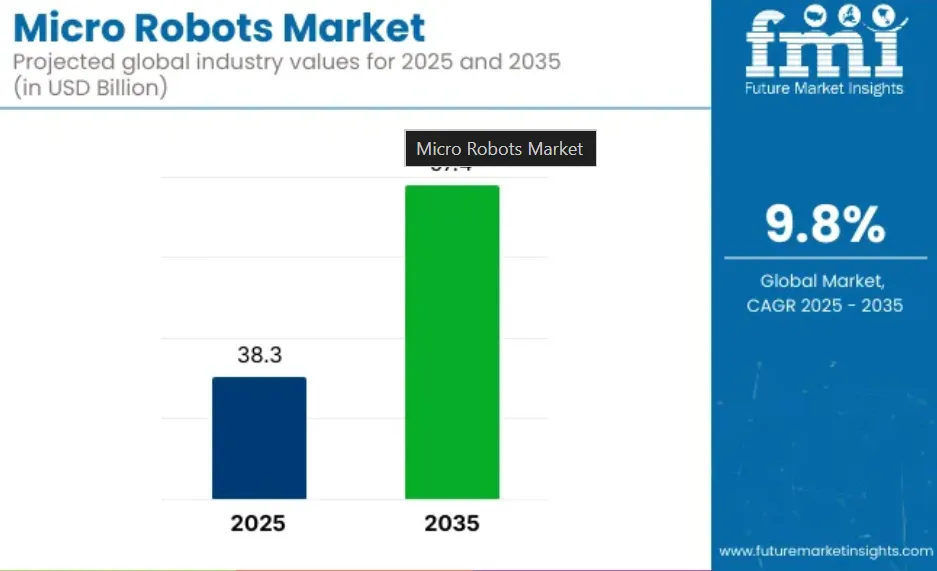
According to a report by Future Marketing Insights, the global microrobot market is currently valued at approximately USD$38.3 billion, and is expected to rise to USD$97.4 billion in the next decade. Advances in nanotechnology, Artificial Intelligence (AI), the Internet of Industrial Things (IIoT) and cloud and edge computing are driving the innovation, as well as the need for compact industrial robots that can deliver precise automation solutions.

As someone who works closely with automation professionals, I regularly speak with integrators across industries and regions. These conversations often reveal similar challenges—space limitations, complex integration, tight timelines—and an ongoing search for practical, scalable solutions. Mecademic robots were developed with these challenges in mind.

Mecademic Industrial Robots has been delivering compact robot solutions since 2013, manufacturing compact industrial robots that provide high-precision tasks in both a compact 6-axis industrial robot arm, the Meca500, and the MCS500, a compact, precise SCARA robot.

One of the keys to Mecademic’s success is partnering closely with integrators who are seeking compact industrial robot solutions for their customers. Stan Gleizer, Director of Strategic Partnerships, Integrators and OEMs, provides an overview of the Integrator Program.

“Mecademic has been around for over 10 years, but not everyone is aware of the advances we have made in our compact robot solutions. The Integrator Program ensures that integrators who partner with us have direct access to our field applications team and our solutions group so that if any challenges come up, we are there to help them. No one knows our robots better than our team. It also benefits us, so that we can get feedback on our solutions and installation, what worked and what didn’t, which helps us continue to improve.”

Compact Robots: An unexpected option for many

Many integrators are surprised to learn that robots can be used in small-scale applications. In the past, they would design custom automation stages to handle delicate or precise work. With Mecademic, they are finding a ready-made alternative that performs reliably with less design time and engineering overhead.

For example, the Meca500 is a slave component, plug-and-work automation component that delivers a six-axis industrial robot arm that connects via PLC or computer.  It stands out for its extremely small footprint, embedded controller, and precision in tight spaces, making it ideal for high-precision applications in constrained environments. 

The MCS500 SCARA offers an excellent combination of reach, motion range, and flexible mounting, eliminating the need for bulky or customized setups. The feedback we consistently receive from integrators is that the flexibility and high precision deliver a clean, simple design solution. With fast cycle times and mounting flexibility, Mecademic’s SCARA is ideal for a variety of applications, including pick-and-place, assembly, and lab automation.

Mecademic is to industrial robots what Mac is to personal computers—streamlined, efficient, and easy to set up and maintain. The difference? Our robots are fully open. They support standard industrial protocols like Ethernet/IP, Profinet, EtherCAT, and TCP/IP, and can be controlled using almost any programming language, with a ready-to-use Python API and examples in C#, LabVIEW, and more.

Lead times that support project timelines

The lead time for a typical industrial robot solution can range anywhere from a few months to over a year, depending on the size of the robot, the complexity and the amount of custom components that are required. Even a “simple” collaborative robot can have a lead time of several weeks or months.

In contrast, the lead time for a Mecademic compact industrial robot is just 2–3 weeks. Because we manufacture most components in-house and operate as a vertically integrated company, we’re able to deliver quickly and reliably. Fast delivery helps keep projects on track and supports better planning—something our integrator partners truly value.

In addition to the fast lead time, we understand that not all control engineers have time to learn a new platform during a busy project. That’s why we provide free training and hands-on support to help teams get up to speed quickly. We aim to ensure every integrator has what they need to succeed, whether it’s technical guidance, documentation, or direct assistance.

Overview of Certified Integrator Program

We view integrators as long-term partners and provide the tools and resources to help them grow their business with Mecademic. With that in mind, we created the Mecademic Certified Integrator Program to provide added value beyond the product itself.

There are three tenets to the Certified Integrator Program: Sales, Marketing and Support.

Sales

We aim to build trusted relationships with integrators who take the time to understand our products and solutions. We make sure they have access to the support they need, when they need it. Their feedback is also essential to helping us improve and ensure we’re delivering the right solutions in the field.

Once an integrator has been approved by Mecademic, a minimum of two technical personnel at the integrator are required to complete advanced training on Mecademic compact robots, and they also must complete annual remote recertifications. Once that is completed, the integrator joins the Certified Integrator Program and has access to:

  • Project inquiries from the Mecademic sales portal based on region, industry, and proven expertise. Mecademic has built a global network of integrator partners who can work in geographic proximity to the end user. 
  • Meetings and lunch and learns to ensure all sales personnel are familiar with the Mecademic family of robots and the features and benefits.
  • Exclusive training on Mecademic’s ultra-compact 6-axis and SCARA robots. This includes remote training and opportunities for in-person training for free (excluding travel costs).
  • Integrators have access to discounted demo units.
  • Mecademic personnel can be involved in sales visits to customers.
  • Once integrators reach a specified sales amount, they will receive lifetime volume pricing on all subsequent purchases. In a niche market, we understand that the integrator may not always need a compact robot, so the volume pricing remains regardless of the length of time between orders.
  • Immediate access to product updates and improvements to ensure certification is always current. 

Support

  • Access to priority support tickets.
  • Priority feature requests.
  • Free remote training for integrator personnel, and discounted end-user remote training.
  • Access to future in-person free in-depth training, including best practices for precision automation, troubleshooting, simulators, offline programming and PLC integration (excluding travel costs).
  • Discounted end-user advanced support.
  • Extended warranty, including delivery and commissioning.
  • Immediate access to product updates and improvements.

Marketing Benefits

  • Co-branded marketing visibility through case studies, trade shows, and promotional content.
  • Access to tradeshow displays and promotional posters. 
  • Discounted display units for tradeshow demonstrations that can be co-branded.
  • Collaboration and support for the creation of white papers and case studies.
  • Inclusion on the Mecademic OEM sales portal for referrals.

Final Thoughts: Enabling better microautomation

Mecademic was created to simplify the complexity of automation and provide integrators with more flexibility in building solutions. By combining compact size, precision, reliability, and ease of integration, our robots enable applications that were once impractical or overly expensive to automate. Our mission is to make advanced automation accessible and to support automation integrators every step of the way.

Categories
Blog Mecademic News

Mecademic Officially Launches Certified Integrator Program to Support the Growth of micro-automation

Montreal, October 14, 2025

Mecademic, a Montreal-based manufacturer of ultra-compact, high-precision industrial robots, has officially launched its Certified Integrator Program on October 1–2, 2025. The initiative aims to strengthen collaboration with system integrators and support the growing global demand for precision automation.

The first cohort for the Integrator Training brought together integrators from across continents, notably from Europe and South America, including BetterProcessMicrotechPercipio Robotics, and Robotech Automation, marking a strong start for this global network of precision automation experts.

Developed in response to the growing demand for microautomation, the program provides system integrators with a structured framework to validate their technical expertise, strengthen their credibility, and stand out in an increasingly competitive market where precision and reliability are key.

Stanislav Gleizer
Director, Strategic Partnerships
Integrators and OEMs

“Certification programs have become an essential way for integrators to demonstrate their expertise and build customer confidence,” said Stanislav Gleizer, Director of Strategic Partnerships at Mecademic. “Our program provides a clear, structured path for partners who want to differentiate themselves while working with compact, precision-focused robotics.”

This first cohort marks a significant milestone in Mecademic’s broader strategy to enhance collaboration with system integrators and promote knowledge transfer in the field of precision microautomation. The initiative builds on insights gathered at Automate 2025 (Chicago) and Automatica 2025 (Munich), where Mecademic confirmed a strong market demand for structured certification frameworks.

Program Highlights

Certified partners gain access to:

  • Advanced training on Mecademic’s 6-axis and SCARA robots to deepen integration expertise.
  • Priority technical and application support for faster project deployment and troubleshooting.
  • Early access to selected projects and upcoming product launches.
  • Visibility opportunities, including co-branding through events, partner campaigns, and listing on Mecademic’s official website.

Open to integrators worldwide, the program includes a review process to qualify and ensure alignment with Mecademic’s technical and quality standards.

Join the Program
The Mecademic Certified Integrator Program is a unique opportunity for system integrators to distinguish themselves in the rapidly evolving field of microautomation.
About Mecademic

Mecademic designs and manufactures the world’s most compact and precise industrial robots, built entirely in Montreal. Its ready-to-use robotic arms allow manufacturers and system integrators to automate complex processes in tight spaces without compromising performance or reliability. Mecademic serves industries including medical devices, electronics, photonics, life sciences, and advanced manufacturing.

Media Relations
Categories
Blog

Why the compact robotic arm is a game-changer for integrators

Introduction: Meeting modern automation demands​

The 2024 World Robotics Report stated that approximately 4.3 million robots are operating globally. From large industrial robots and single-station collaborative robots to SCARA robots and 6-axis robots, robotics and automation continue to drive innovation. In some industries, however, such as medical devices, photonics and semiconductors, the precision required has not been possible with large robot arms. Microautomation is growing rapidly as industries require smaller, more precise, and more flexible solutions. This blog explores how compact robots—like those from Mecademic—address common integration challenges and create new opportunities.

Why microautomation matters for integrators

In industries such as electronics, optics and photonics, medical devices, or quantum sensors, precision is measured in micromillimeters and micrometers (µm). Traditional robot arms are too large to operate with the precision required. Manual operations are time-consuming and can increase cycle times and reduce output, making scaling for large projects a challenge.

One of the challenges with traditional robotic automation solutions is the range of robots from different manufacturers that may already be installed at a customer’s manufacturing facility. Not only is additional space at a premium, but the custom robot arm must be able to integrate with existing automation.

Mecademic: Enabling compact, high-precision automation

Microautomation solutions can provide all the benefits of a robotic automated solution, resulting in reduced cycle times, reduced waste, increased quality control and repeatability and improved overall yield. Mecademic develops the world’s most compact industrial robots, like the Meca500 and MCS500. Designed for performance, reliability and ease of use, Mecademic’s low-maintenance industrial robots are hardware and software-agnostic, and can work with any existing robot installation.

The Mecaportal web interface supports intuitive operation with no proprietary language, complex training or software downloads. It incorporates an autocomplete feature for quicker access to commands and managing saved programs, and enables users to focus on initial configuration and testing rather than struggling with complex programming.

The MCS500 SCARA robot has a 360° range, a 225 mm reach, and 0.005 mm position repeatability. It can be mounted in a variety of positions, including tabletop and upside down. The Meca500 compact six-axis industrial robot arm has 1 µm resolution, 5 µm repeatability, 500g rated payload and 330 mm reach. The Meca500-OB has an optical black surface treatment specifically designed to prevent light interference in photonics applications.

In addition, there are a variety of near-universal compatible end-of-arm-tools including grippers, sensors, Piezoelectric force sensors, vacuum systems, screwdrivers and tool changers that allow you to expand and customize your compact robot arm to get the most out of your investment.

Mecademic has a global customer base and a growing support network.

New markets and applications

Compact robots make automation possible in industries like electronics, medical devices, and optics and photonics. These industries require precision, repeatability and accuracy to a thousandth millimeter or 1μ to 2μ with repeatable results. The challenge for robotics manufacturers and integrators is to deliver the benefits of high-precision robot arms when working with parts the width of an eyelash.

In applications that include alignment, assembly, dispensing, and inspection at a micro-scale, the compact robot arm can operate in tight spaces while offering a 0.005 mm position repeatability. In the optics industry, for example, parts may require different orientations, different assembly processes may require different orientations and even a millimeter of difference between parts can result in failure. Manual assembly is time-consuming; traditional robots do not have the finesse or dexterity. Compact robot arms that operate in small spaces, and are plug-and-work extensions of your existing automation installation offer efficiency, accuracy and precision assembly.

In the electronics industry, products such as earbuds, connectors or implants have many small parts that must be assembled and oriented precisely or the product will fail. Quantum lasers require reliable photonics and accuracy to the 1μ. The Meca500 robot has six degrees of freedom making it capable of extremely precise movements, with repeatability of five micrometers, and one-micrometer position increments making it ideal for optics and photonics manufacturing.

Industries such as technology, wearables, research and academic centres provide microautomation with opportunities to expand and collaboratively innovate.

Space-efficient system design

One of the advantages of compact robot arms is the small overall footprint required to operate it. With embedded controllers and ultra-compact footprints, Mecademic robots allow integrators to build smaller cells and save floor space.

When the Steven Douglas Corp. (SDC) was building a system for their medical devices client, they incorporated the Meca500 six-axis robot into the automation solution which replaced multiple manual processes. The challenge was the assembly required micron-level precision:  the clearance between the rivet and the link hole—the two main elements in the components it builds—was a thousandth millimeter.  One complete assembly comprised 73 parts: 25 links, 48 rivets and 48 welds. The compact robot solution was able to complete the assembly five times faster with a lean, efficient setup that integrated with the other robotic components seamlessly.

High precision and repeatability

While Mecademic robots take little space, they do not compromise on quality, reliability or precision, providing customers with the ability to scale manufacturing to meet increased demand without compromising quality.

Mecademic’s 6-axis robot, the Meca500 delivers repeatability of 5 μm, resolution of 1 μm, and precision down to 0.005 mm, delivering high-quality output in demanding applications. The Meca500-OB has an optical black surface treatment that absorbs 96.5% of visible light, preventing even minor light interference from compromising the accuracy and safety of optical applications.

The compact size of Mecademics’ custom robot arms can replace complex, custom-built systems. They are hardware and software agnostic and can work with any existing robot system.

In the field of optics and photonics, one of the impediments to scalability and reliability is the accuracy and high degree of precision required. To deliver the accuracy required, the industry relies on expensive high-precision linear motor stages and Piezo-actuated flexure positioners, which have limited flexibility and a limited range of motion. 

XVP Photonics is a leader in providing advanced photonic solutions. They were initially skeptical that the Mecademics Meca500 could provide the precision and accuracy required to work as a fully automated assembly for their customers.  XVP engineers tested the Meca500 using a high-power microscope and angular resolution assessments using a Fourier bench to test transverse accuracy and compared the results to theoretical calculations to determine which photonics applications the Meca500 could perform. 

For critical applications such as TO-laser diode collimation, objective lens focusing onto CMOS sensors, and aligning pre-collimated fiber assemblies, the angular precision of the Meca500 successfully completed the tasks. 

XVP determined the Meca500 could be used for photonics alignment in optical systems with focal lengths above 0.5 mm and mode sizes larger than 5 µm.

In addition, XVP developed a photonics assembly application for lens alignment and glue dispensing, and determined that Mecademics solutions could be used for 90% of XVP’s current photonics projects.

Simplified integration

One of the advantages of the Mecademics robots is that they integrate easily with standard protocols and are compatible with most PLCs. They are hardware and software agnostic, resulting in a plug-and-work automation component that requires no custom coding or proprietary programming. It also requires no software downloads, complex training programs or additional options. 

Flexible mounting options, including tabletop or upside down further simplify deployment, with the compact robot arm weighing only 4.3 kg.

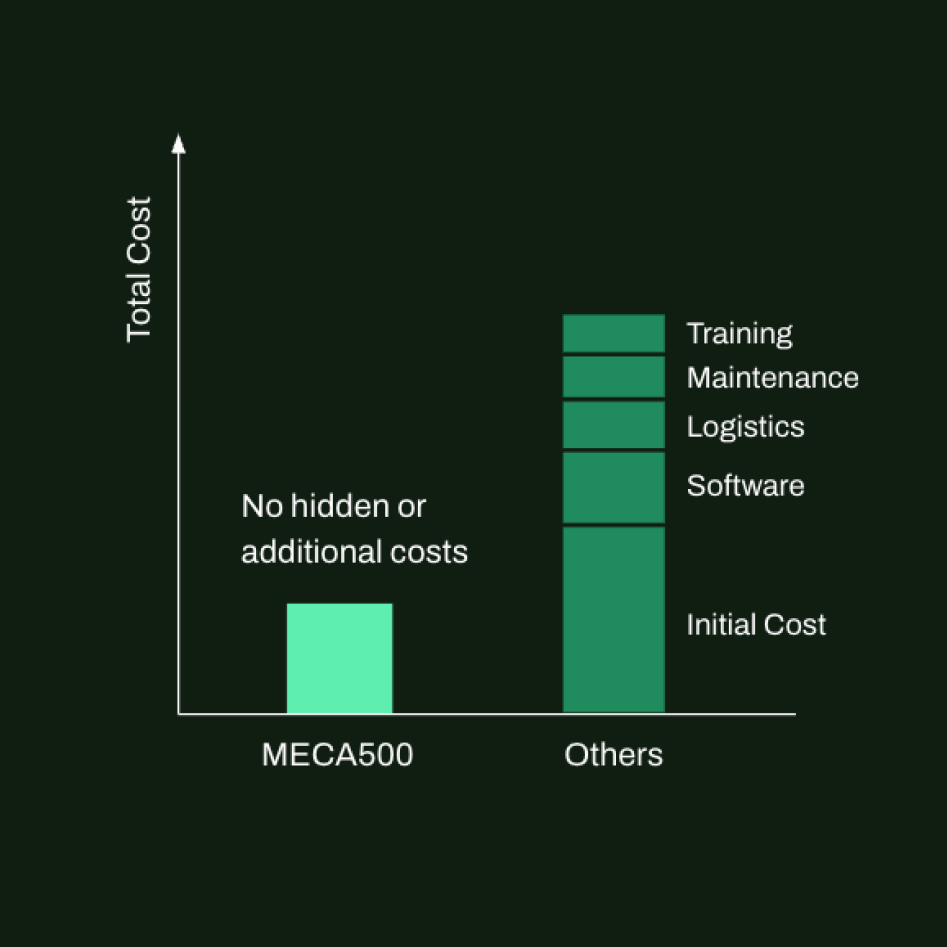
Lower Total Cost of Ownership (TCO)

Any robotic automation installation represents a significant capital expenditure (CapEx) and operational expenditure (OpEx).  A reasonable return on investment (ROI) for most automation solutions is generally 6-18 months in terms of labour savings, increased productivity, reduction in waste, improvements in quality and repeatability. 

Since Mecademic compact robot arms are plug-and-work, there is reduced engineering time, low maintenance, and quick user training, which results in lower CapEx and OpEx. In addition, they have a long product lifespan and minimal downtime, which further enhance ROI.

400% Production Growth Through Robotic Innovation

Seymour Advanced Technologies was looking for a comprehensive solution for one of their customers, an ophthalmic pharmaceutical company that had designed a microneedle for use in ocular surgery. They required a sterile solution that could increase throughput while maintaining the rigorous safety protocols required by the medical industry. 

The process involved the insertion of a 25 mm long rod into a hollow cylinder with only 60 microns (0.0015″, ¼ to ⅓ human hair) of clearance. It was being completed by hand with the aid of a high-powered microscope, which resulted in output of approximately 63 units per hour. There was also significant needle breakage during the insertion process, creating medical waste. 

SEYMOUR Advanced Technologies was seeking a comprehensive solution for one of its customers, an ophthalmic pharmaceutical company that had developed a microneedle for use in ocular surgery. They required a sterile solution that could increase throughput while maintaining the rigorous safety protocols needed for the medical industry.

The process involved inserting a 25 mm long rod into a hollow cylinder with only 60 microns of clearance, which is thinner than standard printer paper. This delicate task was performed by hand under a high-powered microscope, yielding about 500 units per 8-hour shift. The extreme precision required also led to frequent needle breakage during insertion, creating additional medical waste and variability in production.

SEYMOUR incorporated Mecademic’s Meca500 six-axis robots to complete the assembly process. The system uses 3D cloud imaging to detect the physical parts, as well as their thickness, length, and straightness. The relative positional error is then calculated, allowing the robots to be adjusted for accurate assembly.

By incorporating real-time evaluation into the programming, the robots achieved 97–100% autonomous operation with virtually no maintenance required. Since its implementation, throughput has increased by 400%, enabling SEYMOUR’s client to scale production reliably without additional labor or floor space requirements. In addition, the compact Meca500 robots reduced system costs by nearly 50% compared to traditional automation systems while maintaining the strict precision required for medical device manufacturing.

Supporting integrators: The Mecademic Integrator Program

Mecademic believes strongly in partnering with integrators to build a successful microautomation network. As part of that commitment, the Mecademic Integrator Program is a structured program connecting certified integrators to new business opportunities.

Our integrator certification program is designed for custom machine builders and systems integrators who specialize in compact automation solutions. We provide certification including extensive technical training on Mecademic’s ultra-compact 6-axis and SCARA robots, participation in partner activities, and showcasing Mecademic robots. In addition, certified integrators receive product updates to keep the integrator certification current, and receive dedicated support.

Some other key benefits include:

  • Lead transfers: real projects through referrals based on region, industry, and proven expertise 
  • Discounted demo units
  • Lifetime volume pricing
  • Co-branded marketing visibility through case studies, trade shows, and promotional content
  • Free training and technical support, as well as product updates to always stay current
  • Direct line to Mecademic’s applications and support teams
  • Extended warranty
  • Listing on Mecademic’s website

Conclusion: Compact robotics is the future of machine-building

While the benefits of robotics in manufacturing have been proven to be beneficial, there are limitations to the type of projects that traditional large robotic automation solutions can complete. Microautomation offers integrators access to new industries, better system designs, greater precision, and reduced costs. The small footprint of compact robot arms does not require large reconfiguration, and can perform tasks in industries such as medtech, optical and photonics, academic research, biotech and pharmaceuticals that have been limited in the type of automation due to the precise nature of the production. 

Mecademic six-axis robot microautomation solutions are hardware- and software-agnostic, easy to learn and operate and the Mecaportal allows for ease of use, real-time information and intuitive programming. 

Mecademic provides the tools and support to help integrators succeed in this fast-evolving landscape. Not only can custom machine builders and systems integrators become certified Mecademic integrators, they can join the Mecademic Integrator Program to become a certified partner and receive referrals based on region, industry, and proven expertise, updates on products to stay current, co-branded marketing opportunities such as case studies, trade shows and promotional content, and a direct line to technical support, product discounts, and a listing on the Mecademic website. 

Microautomation robotic solutions can address the challenges of precision, repeatability, and a smaller footprint for industries that have been unable to take advantage of all the benefits traditional robotic automation can provide. Mecademic compact industrial robots provide maximum efficiency, even when space is limited. These plug-and-play micro-automation robots are designed for component manufacturing, optics & photonics, electronics, medical devices, biopharmaceuticals, and research centers.

Categories
Blog

Industrial automation trends and perspectives for 2025

Philippe Beaulieu
CCO & Executive VP at Mecademic

As someone who’s spent years immersed in manufacturing, automation, and industrial robotics, it’s fascinating to witness how those fields have evolved. And, as one could expect, 2025 brings a new wave of innovation, opportunities, and challenges for businesses and professionals.

For us at Mecademic, it’s an exciting time to push boundaries and reimagine what automation can do. In this article, I share insights on industrial automation trends and some perspectives for companies hoping to thrive in this rapidly advancing landscape.

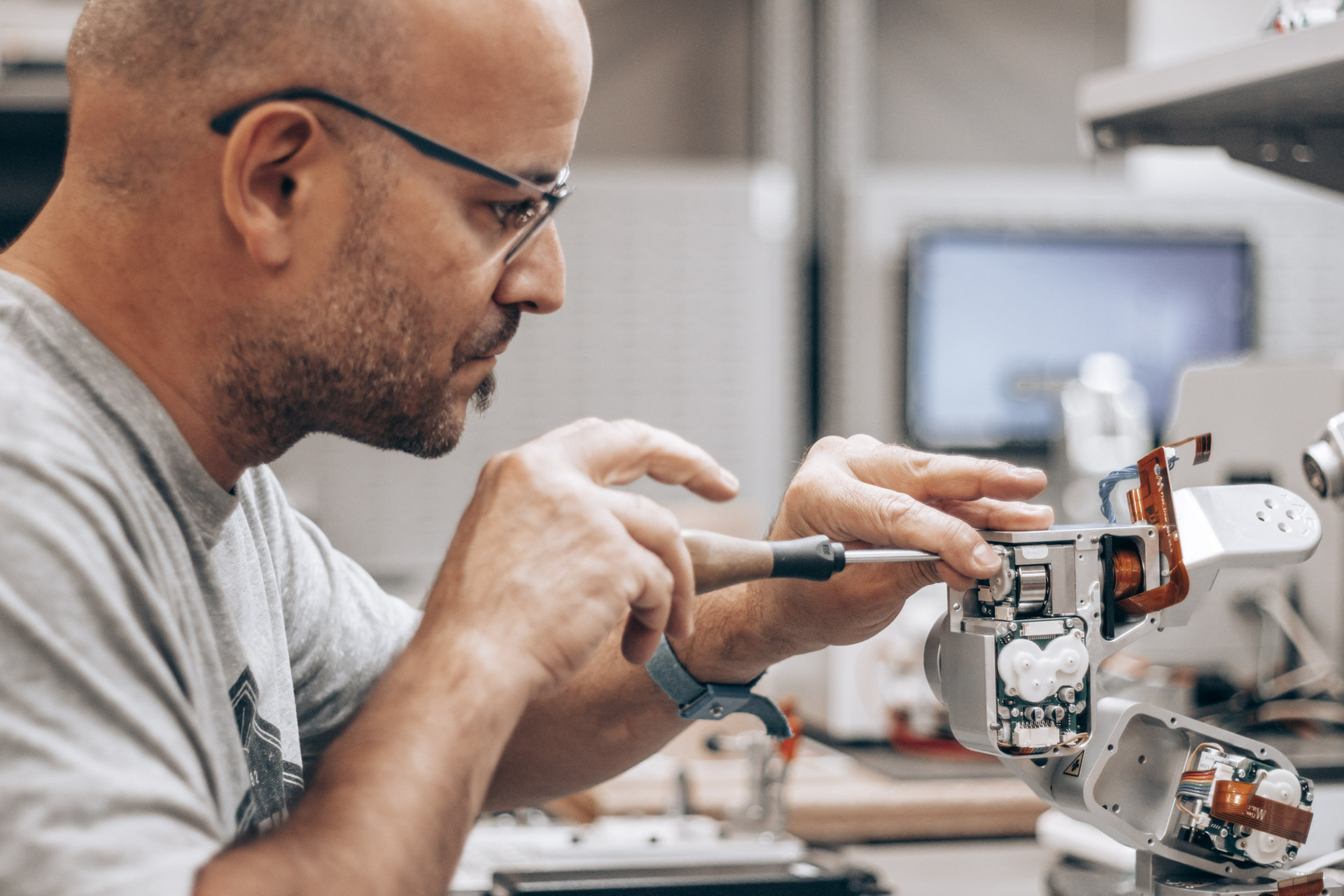
Employee performing repair tasks on a Meca500 robot

Overcoming challenges to start automating

Embarking on the automation journey can feel daunting, particularly for smaller or younger companies. Today, I see businesses facing three primary hurdles to get started in industrial automation. Here they are:

Skilled talent shortage

North America doesn’t seem to have enough skilled professionals to cater to the demand for optimal automation solutions. Many potential clients struggle to find the expertise they need to, for example, build an automation cell or integrate industrial robots into their specific processes.

One viable solution Mecademic has found is to match customers to skillsets wherever they may be. To bridge this talent gap, we collaborate with machine builders and integration partners across North America or anywhere around the world—for example, in countries like France, Poland, and Thailand. A globalized integration ecosystem gives companies the necessary support and knowledge to kickstart their automation projects regardless of location.

Cost management

Automation is often perceived as an expensive investment, and for good reason. However, strategic planning can make this transition more accessible. One way to do this is to leverage one’s automation experience to guide clients through phased implementation plans and break down large investments into more manageable steps.

Additionally, we go the extra mile to educate clients on the measurable benefits of automation, such as increased productivity and reduced operational costs, which always outweigh the initial costs. These strategies have helped even small businesses confidently embrace automation.

Organization-level limitations

Even large organizations can be slow to adopt new technologies. Change is complex, and resistance often stems from uncertainty, a lack of understanding of potential benefits, or corporate culture. Overcoming this challenge involves more than just offering solutions; it’s also about building trust and demonstrating tangible value.

Throughout the years, I’ve learned that it takes expertise, personalized support, and clear communication to create such a relationship between an automation solution provider and its customers. This is the surest way to help businesses navigate their insecurities and implement automation successfully.

New automation opportunities in traditional industries

One of the leading industrial automation trends today is the new possibilities some robotic solutions are bringing to well-established industries like optics & photonics and medical device manufacturing. Historically, those sectors relied heavily on manual processes due to the high costs and technical limitations of available solutions.

However, this narrative is changing. By integrating compact and precise automation solutions, such as the Mecademic robots, these industries can scale operations, enhance product quality, and meet market demands with full confidence and unprecedented efficiency.

In optics & photonics, for example, our Meca500 six-axis robot helps assemble delicate, infimal components and even perform optical alignment tasks with outstanding repeatability and a minimal footprint—at a fraction of the cost of traditional processes. For more information about the benefits of the Meca500 in optics & photonics, download XVP Photonics’ white paper based on their tests with the robot and see the impressive results they achieved.

Similarly, in medical device manufacturing, our robot’s precision enables tasks such as microassembly and quality control, which are typically complex to automate due to the very nature of those products. Take Steven Douglas Corp., for example: they integrated our Meca500 into an automated microscopic assembly process for a client that previously relied on a manual process. As a result, they reached efficiency levels of over 99% and unprecedented scale capability.

Those are just examples of a broader tendency of automation to be more available to more businesses through highly innovative solutions. This trend is sure to gain speed, and we at Mecademic will present new advancements this year that will drive even bigger transformations.

Expanding the use of AI in industrial automation

Artificial intelligence (AI) is more than a buzzword: it has the potential to upend whole industries, and industrial automation is one of them. While AI applications in robotics are still developing, the potential for groundbreaking advancements is immense. From smarter pathfinding algorithms to enhanced gripper feedback, AI is poised to make robots more efficient, adaptive, and capable of handling increasingly complex tasks.

One area where AI shows promise is streamlining operations through more efficient machine programming. Intuitive AI-powered interfaces can reduce operators’ learning curves, making automation more accessible to companies with limited expertise. At the same time, those systems can make the job easier and faster for more established organizations and experienced programmers.

This trend is particularly promising with hardware-agnostic solutions, which can be applied to different robots and customized according to the user’s needs. One such platform is the Artificial Motor Cortex (AMC) developed by dexman. This technology is a pre-trained visuomotor model that maps visual and tactile inputs to “teach” tasks to robots from language and demonstrations.

At Mecademic, we’re actively exploring ways to incorporate AI-driven innovations into our solutions. While these advancements are still in their early stages, our commitment to staying at the forefront of microautomation ensures that we’re well-positioned to deliver cutting-edge technologies that address the evolving needs of our customers.

Industrial automation trends: looking ahead

Automation and robotics are evolving rapidly, and 2025 is shaping up to be a pivotal year. By addressing common challenges, unlocking new opportunities in emerging industries, and staying ahead of AI-driven advancements, companies can position themselves for success.

As we navigate these industrial automation trends, our commitment at Mecademic remains the same: delivering innovative, high-precision, ultra-compact solutions that empower businesses to automate confidently. The journey ahead is exciting, and we’re thrilled to be part of it.

Categories
Blog Event Recaps

Our main insights from the W3+ Fair Jena 2024

In September 2024, for the first time, Mecademic presented its industrial robots at the W3+ Fair Jena, one of Germany’s most prestigious networking fairs in photonics and optics. For two days, over 200 exhibitors and partners from 11 countries showcased their solutions to more than 2,300 visitors.

Jena has been a center of expertise in optics for 150 years and is the hometown of leading companies in this industry, such as Zeiss, Jenoptik, and Schott. This makes W3+ Jena a huge opportunity for businesses to present their products and solutions. There, we did a demonstration of an optical alignment and glue dispensing application using our Meca500-OBST, a version of our six-axis industrial robot with light absorption capabilities, the world’s most compact and precise in its category.

This article will discuss how the event went, the opportunities in automating optics and photonics, and the realities of the German market based on insights from our people at W3+ Jena: Philippe Beaulieu, Mecademic’s CCO and Executive VP, and Stefan John, our Sales Representative in the DACH region (Germany, Austria, and Switzerland).

Stefan John presenting our solutions to attendees

Insight #1: The Meca500 made a big impression

All the visitors to our booth at the W3+ Fair Jena were highly impressed by Mecademic’s solutions and our optical alignment demo. This isn’t news since we’ve seen similar reactions from our clients and other tradeshows. However, it was our first time in Jena, and it was exciting to notice it in an event where most exhibitors and attendees were in optics and photonics.

The visitors’ enthusiasm for the Mecademic robots was reflected in the intense experience Philippe and Stefan had at the booth. During the two days of the event, a non-stop flow of attendees wanted to learn more about the Mecademic robotic solutions and services.

Many visitors mentioned how our application perfectly reflected their processes, proving that our six-axis robot is a perfect fit for optics and photonics. Some even expressed surprise at the Meca500’s capabilities, having not realized until the event that a six-axis robot with such compactness, precision, flexibility, and ease of use was available in the market.

Visitors also praised the Meca500’s design, build, and high quality. The non-reflective capability of its black version was one of the most commented aspects by attendees, too. The Meca500-OBSI’s black surface has a 95%+ light absorption capacity, dramatically reducing measurement inaccuracies and safety hazards while accelerating production load times.

Stefan John presenting our solutions to attendees

Insight #2: The opportunities in optics and photonics are immense

Given the options available in the market until now, the overall cost of automating optics and photonics processes has always been considered very high and not worth the investment. For that reason, the industry still relies heavily on manual work for operations such as optical alignment, pick-and-place, dispensing, and quality control.

Due to those human-centered operations, yields are considerably low, and damage to components is very common, given the small, delicate parts involved in optics manufacturing. To avert this issue, companies in this industry are permanently looking for new opportunities to automate their processes and increase productivity, but in a sustainable way for the business.

This is where Mecademic fits in. Our innovative robots enable reduced footprint, great flexibility, and unrivaled accuracy, resolution and repeatability—at a considerably lower cost than alternative and custom solutions. Moreover, based on our chats with visitors at the W3+ Fair, our robots’ ease of use and installation is a plus for an industry that’s not particularly familiar with automation and integrating robots in its operations.

To benefit even further from this unique opportunity, our next step is to partner with local integrators and machine builders to build the automation cells the optics and photonics businesses in Germany are looking for. In Jena, we met and discussed with some of them, leading to some promising perspectives. The potential is immense, and we’re excited to face the challenges and see this transformation happening!

Stefan John presenting our solutions to attendees

Insight #3: Being in Germany is a giant leap for Mecademic

Finally, being at W3+ Jena only reinforced how crucial our presence in Germany is, with Stefan as our man out on the field. This is Europe’s biggest economy and one of the world’s most innovative markets, so partnering with other businesses in the country is fundamental for us to deliver on our mission to become the leading global supplier of compact robotic solutions.

Of course, bridging the language barrier is a crucial aspect of having a physical presence in Germany. Moreover, being geographically close to German and Swiss customers gives us a deeper understanding of local market trends and developments. This proximity allows us to gather invaluable insights, making it easier to tailor solutions that truly meet our clients’ needs.

More specifically, while in Germany, we’re able to visit companies, see their processes firsthand, and understand their production needs more in detail. Obtaining this kind of knowledge is one of our priorities now, one that will make the most difference in providing customers with the best robotic solutions in that region.

“We need to be there, on the ground, to grasp what they’re doing,” says Stefan. “And then, we need an integrator to help design a small production cell that can be connected later on to a transport system, a conveyor belt, or something similar and to tie everything together.”

Now, we can’t wait for W3+ Jena 2025! If you’re in Germany or in the optics and photonics industry and want to better understand our solutions, book one of our experts.

Categories
Blog Mecademic News

IIN integrates Mecademic’s supercompact SCARA robot in its new white-label robot cell

International Innovation Network Oy (IIN), a Finland-based automation solutions company, have partnered with Mecademic to integrate the MCS500 — the world’s most compact, most precise SCARA robot — as a central component in their soon-to-be-released white-label desktop robot cell.

First preview of the future IIN robot cell

According to IIN’s CEO Teijo Fabritius, this new robot cell will be a cost-efficient standard automation solution ideal for operations requiring little or no customization. This solution will be perfect for applications such as quick assembly, glue dispensing, functional testing, and various types of pick-and-place for industries like medical and diagnostic device manufacturing, consumer electronics, and industrial electronics.

With its unrivalled compactness and precision, Mecademic’s MCS500 will be a central component of this new solution. Designed for fast cycle times and mounting flexibility, the MCS500 delivers maximum efficiency at much lower overall costs than the competition.

“We have been following Mecademic for a long time. When we got the news they had launched a SCARA robot, we knew we had the right component for our new solution,” says Fabritius.

“We at Mecademic are very happy to partner with IIN. Our MCS500 will deliver precision and high performance in the small form factor IIN expects. Reducing the size of machines is a key global trend that we are seeing in the manufacturing machine building industry,” says Mecademic’s CCO & Executive VP Philippe Beaulieu.

More details on IIN’s new automation solution, such as technical specifications and launch date, will be available soon.

About IIN

International Innovation Network (IIN) specializes in production automation solutions tailored to various industries. With a dedicated focus on Partner Network Management for collaborative excellence, IIN’s solutions cover assembly automation, functional testing, process verification, and Solution Optimization for superior operational efficiency.

About Mecademic

Mecademic applies innovative engineering and architectural simplicity to build the world’s most precise and compact industrial robots in their categories. With plug-and-work systems, a tiny footprint, and reduced energy consumption, Mecademic’s robots are in over 40 countries, enabling the highest precision in microautomation at some of the world’s biggest brands, emerging disruptors, and academic institutions.

Categories
Blog Event Recaps

Automate 2024: A Showcase of Innovation and Collaboration

Last week’s Automate 2024 Trade Show was a remarkable event, brimming with the latest advancements in automation technology. As a leading force in micro-automation, we were thrilled to be part of this dynamic exhibition, showcasing our cutting-edge solutions and engaging with industry peers. The event provided an excellent platform to highlight our commitment to innovation and the collaborative spirit that drives our success.

Hands-On Demos: Experiencing Innovation Live

Our booth was designed to focus on attendee engagement and interactive experiences. We created an immersive environment where visitors could test our compact industrial robots and proprietary web interface, the MecaPortal, firsthand. This setup allowed attendees to appreciate our solutions’ seamless integration and user-friendly nature.

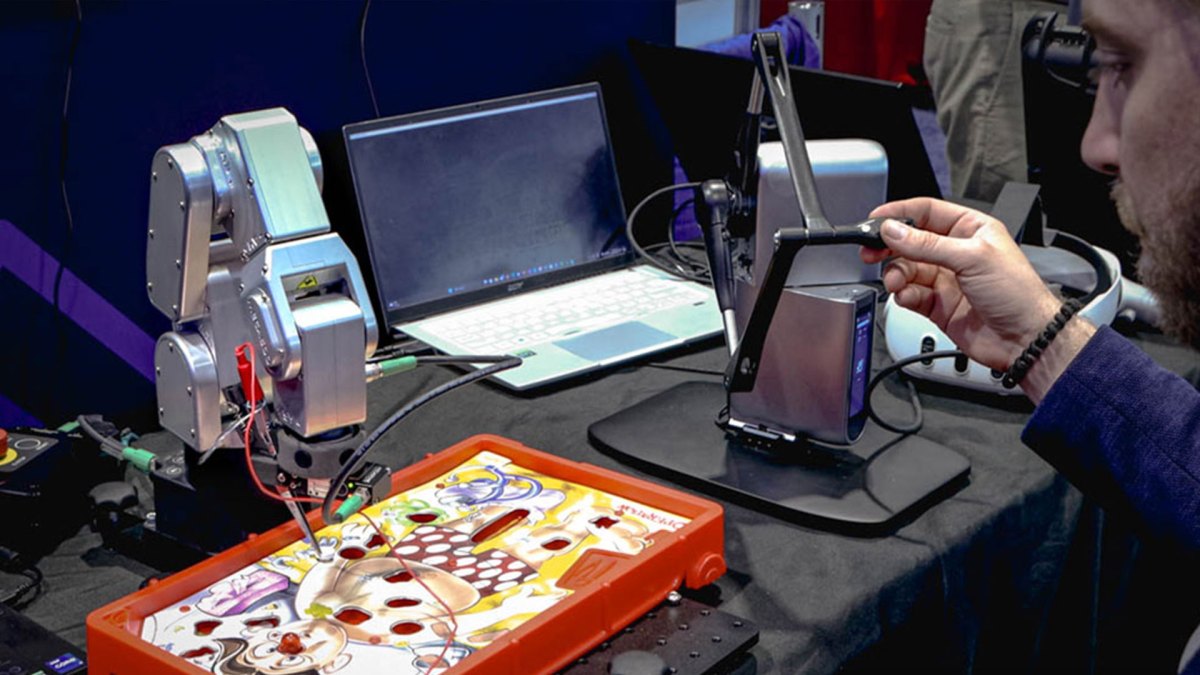
One of the standout features of our booth was the Haply showcase, where visitors could use the Haply haptic device to control the Meca500 in a mixed-reality environment. This interactive demo was a hit, demonstrating the precision and versatility of our robotics uniquely and engagingly.

Collaborative Innovation: Partnering for Success

Our collaboration with partners at the show resulted in several innovative exhibits. A particular highlight was our demonstration with Planar Motor, featuring four Meca500 robots assembling and testing multiple cell phones. The cellphones moved between stations on a Planar Motors Mover (xBot), showcasing a seamless and efficient assembly line:

  • One robot dispensed glue.
  • Another soldered a connector.
  • A third tested connections.
  • The fourth performed a laser inspection.

This exhibit captivated attendees, showcasing our robots’ advanced capabilities and precision in a real-world application.

Unveiling the Meca500-OBST: Revolutionizing Optics Manufacturing

We proudly announced the launch of our latest product, the Meca500-OBST (Optical Black Surface Treatment). This anodized 6-axis robot arm addresses significant challenges in optics manufacturing and AI vision systems, where light reflection can cause measurement inaccuracies and safety hazards. By minimizing these reflective issues, the Meca500-OBST enables faster production load times.

“After working with beta customers to confirm the effectiveness and positive impact of this solution, we are excited to introduce the Meca500-OBSI to all our customers,” said Philippe Beaulieu, EVP | CCO of Mecademic. “As the only light-absorbing 6-axis robot in its class, the Meca500-OBST offers unique value, especially for automation processes highly impacted by light reflection such as optics and photonics.”

Event Highlights: From Panels to Performances

One of the fun and creative showcases at our booth was the Star Wars display, where our Meca500 robots performed like “actors.” This display highlighted our robots’ versatility and precise movements, delighting the audience and demonstrating our technology in an entertaining format.

We also hosted a Breakfast Panel & Networking Session with Investment Quebec, The Quebec Government Office in Chicago, Vooban, and Haply. This session featured industry experts discussing how different manufacturing synergies are reshaping the future of automation. Stay tuned for our upcoming blog, which will delve into the insights shared during this session.

Partner Collaborations: Expanding Our Reach

Additionally, our solutions were featured in eight other booths, thanks to our valued partners:

  • Harmonic Drive: Precision in motion with custom-engineered servo actuators and gear solutions.
  • KEBA: Innovating automation with user-friendly solutions tailored to diverse industry needs.
  • Asyril: Swiss excellence in flexible feeding systems with advanced 3-axis vibration technology.
  • Zaber: Affordable, integrated precision positioning devices for photonics and life sciences.
  • ReeR: Pioneering safety sensors and light curtains for industrial safety.
  • Kistler: Leading in dynamic measurement technology for pressure, force, and acceleration sensing.
  • Haply: Bridging digital and physical worlds with touch-enabled tools, enhancing human capabilities.

Bota Systems: Empowering Robots with a Sense of Touch

We were excited to co-exhibit with Bota Systems, a leader in developing and manufacturing multi-axis force-torque, torque, and custom sensors. Bota Systems’ vision is for robots to work and move as naturally and freely as humans, giving machines the sense of touch. Their accomplished team of robotic, software and mechanical engineers continually develops advanced sensors to support various applications, streamlining processes for research and industry. At Automate 2024, Bota Systems showcased three force-sensitive applications: precise polishing on a bench grinder, adaptable deburring with force-based contour following, and flexible assembly and product testing, including automated cable insertion and life-cycle testing.
Looking Ahead: Join Us at Future Events

We extend our heartfelt thanks to our partners and attendees for making Automate 2024 a resounding success. Your enthusiasm and engagement drive us to continue innovating and pushing the boundaries of what’s possible in micro-automation. We look forward to seeing you at our upcoming events, including the W3+ Fair in Jena, Germany, on September 24-25, 2024, and ATX in Montreal in November 2024.

For more information on our products or to discuss potential collaborations, contact us today!