1. The Design Revolution: Beyond the Gantry
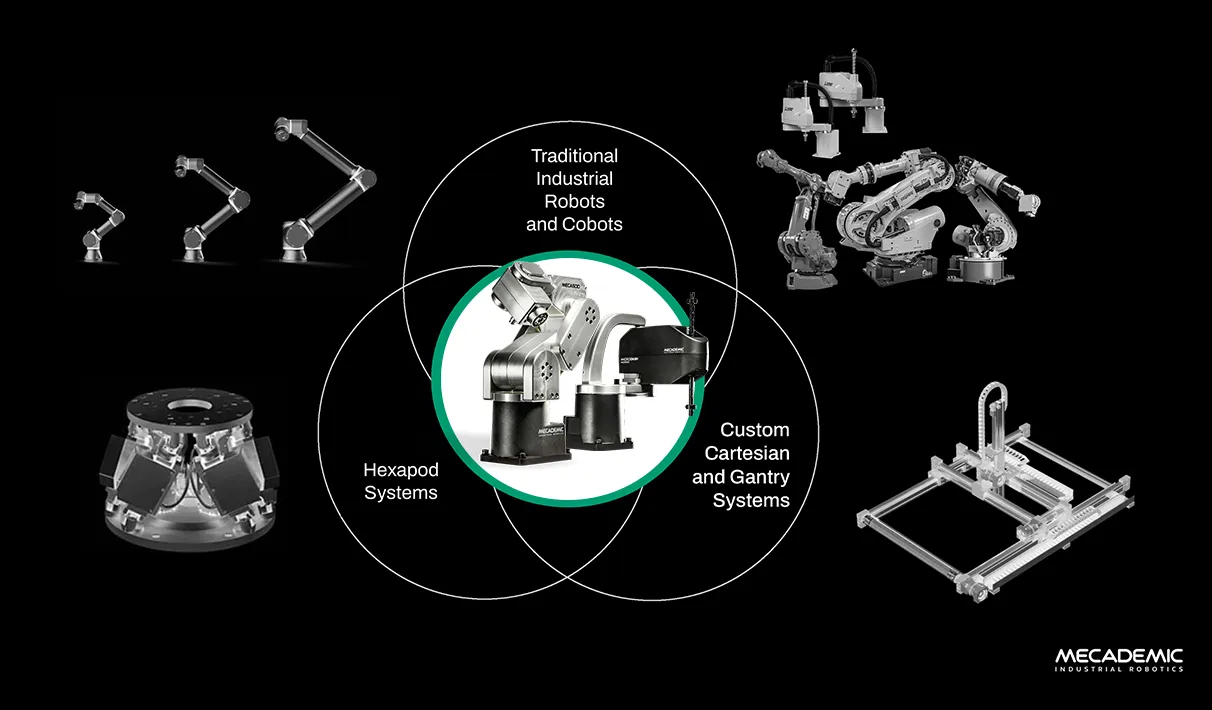
For years, the default solution for precision automation was the Cartesian system or linear gantry. But as we move into 2026, that architecture is being challenged. The trend is a decisive shift toward ultra-compact, six-axis, and SCARA industrial robots, replacing traditional systems.
This isn’t just an aesthetic choice; it is a strategic engineering decision. Shifting to compact robotic arms allows machine builders to:
- Simplify Architecture: Reduce the number of mechanical parts required to build a machine, also reducing costs
- Maximize Cleanroom Real Estate: Save critical space by eliminating bulky gantries.
- Increase Flexibility: Gain six degrees of freedom for complex manipulations that linear systems simply cannot execute.
Moving forward, the most competitive machine designs will be those that achieve high precision with the smallest possible footprint.
2. Practical AI: Optimizing the "Invisible" Tasks
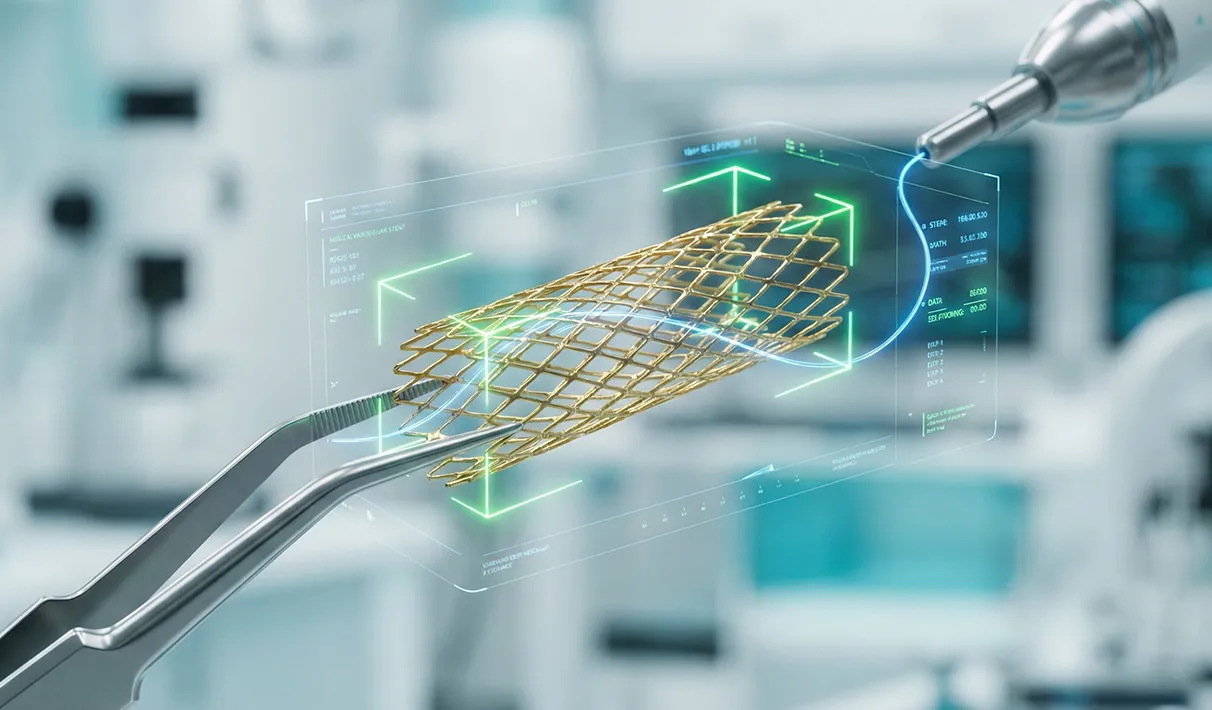
Artificial Intelligence is often discussed in abstract terms, but in medical microautomation, its application is becoming highly practical. We are seeing AI mature into a necessary tool for two specific areas: Vision and Programming.
Next year, expect to see AI play a larger role in inspection—detecting minute defects on microscopic parts that standard rule-based vision might miss. Furthermore, AI is emerging as a powerful assistant for integrators, helping to optimize path planning and coding. This technology is not about replacing engineers; it is about accelerating deployment and ensuring optimal cycle times.
3. The Power of the Agnostic Ecosystem
In the world of high-precision manufacturing, no component works in isolation. Success in 2026 will depend on seamless integration among the robot, the vision system, the part feeder, and other hardware and tools.
We are seeing a trend toward “agnostic” integration. Whether it is 2D or 3D vision or specialized feeding technologies like those from our partner Asyril—which are essential for handling very small parts—the goal is to select the best technology for the specific process. The innovation lies in the active, real-time alignment between these components, ensuring that even the smallest parts are placed with micron-level accuracy.
4. Collaborative Knowledge Sharing
The medical device industry has historically been secretive, with companies closely guarding their processes. However, a subtle cultural shift is underway.
To accelerate the adoption of microautomation, there is a growing willingness to share “what is possible”. When major players demonstrate that complex, microscopic automation is achievable, it builds confidence across the entire ecosystem. This visibility helps smaller companies, which may lack vast R&D resources, to make investment decisions they otherwise wouldn’t. In 2026, shared success will drive industry-wide innovation.
A Strategy for the New Year: Start Small
As we approach 2026, our advice to manufacturers looking to embrace these trends is rooted in pragmatism. Do not feel pressured to automate an entire production line overnight.
Instead, talk to machine builders to identify the “easy pickings”—the processes that are most ripe for automation. Focus on deploying a single machine that excels at a single specific process. By phasing your transformation, you reduce risk and build the confidence required to scale up to more complex microautomation challenges.
The future of medical manufacturing is precise, compact, and automated. Let’s make 2026 the year we build it.