Categories
Blog Product Releases

See the Unseen: How Mecademic’s New Meca500-OBST Robot is Changing the Game in Optics Manufacturing

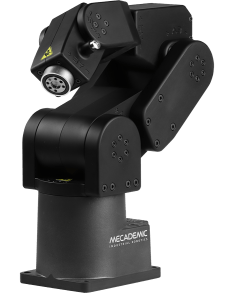
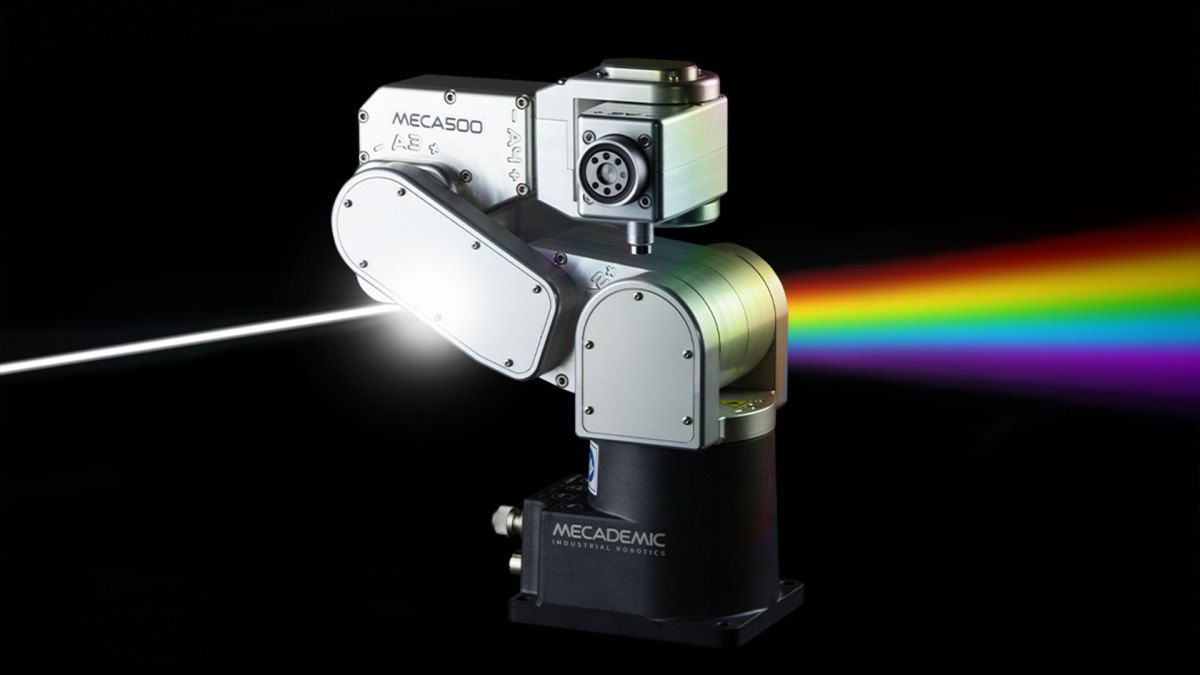
Montreal, Monday, May 6, 2024Mecademic, a global leader in compact robotics solutions, is proud to announce the launch of its latest innovation, the Meca500-OBST (Optical Black Surface Treatment). This micro-automation robot features a unique optical black surface treatment that absorbs up to 96.5% of light, reducing reflection and enhancing safety in sensitive manufacturing environments.

The Meca500-OBST was engineered to tackle significant challenges in optics manufacturing or AI vision systems, where light reflection can lead to measurement inaccuracies and pose safety hazards. By minimizing these reflective issues, the Meca500-OBST enables faster production load times.

“After working with beta customers to confirm the effectiveness and positive impact of this solution, we are excited to introduce the Meca500-OBST to all our customers, said Philippe Beaulieu, EVP|CCO of Mecademic. “As the only light-absorbing 6-axis robot in its class, the Meca500-OBST offers unique value, especially for automation processes highly impacted by light reflection such as optics and photonics.”

Digital Manufacturing Ireland (DMI), an organization focused on adopting high-impact technologies for manufacturers, was one of the beta testers. Tommy Brennan, Lead Machine Vision Specialist at DMI, shared, “We had an opportunity to beta-test the new black anodized 6-axis robot from Mecademic and found it positively impacted manufacturing use cases. For example, the Mecademic robot could come much closer to the product being inspected without affecting its illumination, allowing for faster load time in production.”

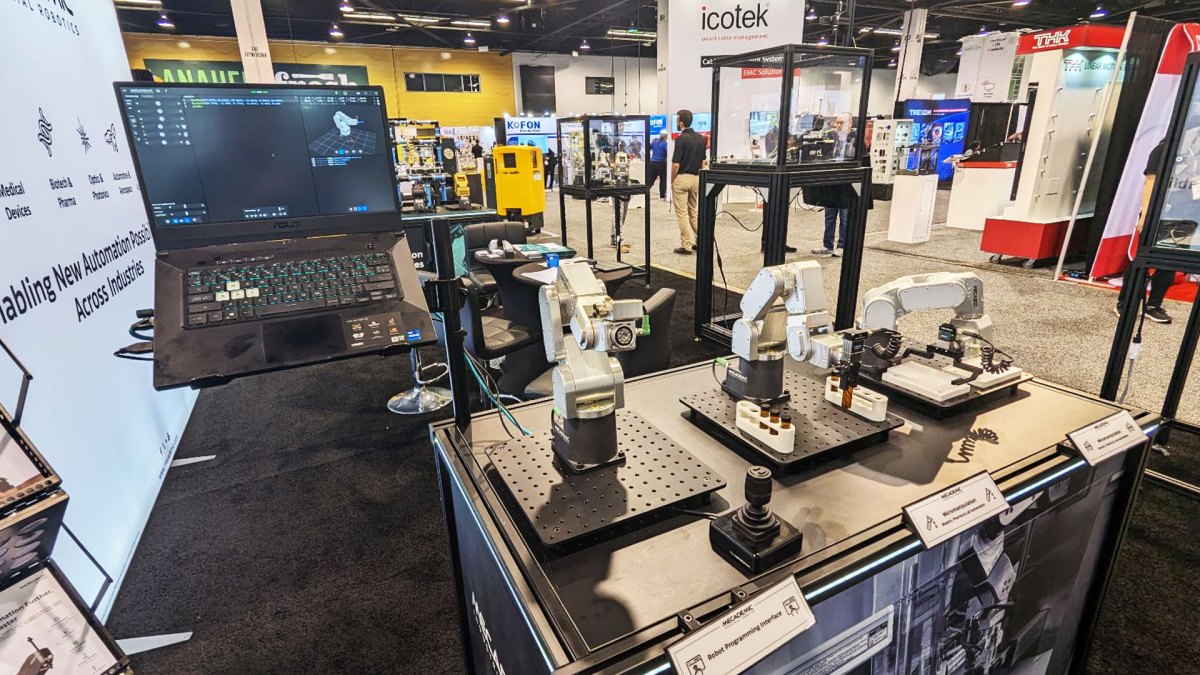
The Meca500-OBST is available now and will be showcased at Automate in Chicago from May 6 to 8, 2024. It will also be featured at the W3+ Fair in Jena on September 25 to 26, 2024, where attendees can witness the robot performing optical alignments and demonstrating its capabilities in real-world applications.

Discover how the Meca500-OBST can improve your production processes and ensure a safer work environment. Visit the Meca500-OBST product page to learn more about its light absorption capabilities and benefits.

Mecademic continues to lead in industrial robotics, with a strong focus on innovation and customer engagement. Last year, the company launched the MicroDASH-MCS500, the most compact and precise 4-axis robot arm in the industry, which has been recognized with an innovation award at the Robotics Summit 2024. This accolade underscores our commitment to pioneering solutions that reshape manufacturing landscapes. With the recent launch of the Meca500-OBST, Mecademic anticipates similar acclaim for its ongoing contributions to robotic technology.

About Mecademic

Mecademic designs and manufactures the world’s most compact and precise industrial robots, tailored for industries requiring utmost precision, including life sciences, medical devices, automotive and electronic components, and more. Headquartered in Montreal, Canada, Mecademic is dedicated to empowering automation with minimal footprint, maximizing efficiency, and transforming operations globally.

Categories
Blog Event Recaps

Control Automation Day 2024 Recap

On Tuesday, March 26th, we participated in Control Automation Day, a free virtual conference and trade show designed for control engineers. The one-day event included keynote addresses from influential engineers and companies, live sessions from industry experts, and digital exhibitor booths from industry-leading manufacturers and distributors. Here are the highlights from last week’s event.

A Deep Dive into Precision vs. Accuracy: Prof. Bonev’s Compelling Keynote

Our presence at the event was highlighted by a compelling keynote delivered by Professor Ilian Bonev, our co-founder and a leading figure in robotics. Titled “Beyond Repeatability: Accuracy Drives the Next Generation of Robots,” Bonev’s presentation addressed a key misconception – the interchangeability of precision and accuracy. He delved into the nuanced differences between these terms and their critical roles in optimizing robotic operations.

Bonev, who also serves as a professor at École de Technologie Supérieure (ETS) and Director of the Control and Robotics Laboratory, leveraged his extensive academic and practical expertise to demonstrate how Mecademic’s compact robotic solutions redefine micro-applications with unparalleled accuracy. This, he explained, is revolutionizing industries like electronics, optics/photonics, medical devices, automotive components, and even watchmaking.

The presentation explored real-world examples, illustrating the power of precision beyond traditional expectations. From increased productivity and quality control to setting new standards in throughput, energy efficiency, integration, and overall performance, Bonev’s keynote provided valuable insights for both seasoned industry veterans seeking to enhance operations and emerging entrepreneurs poised for innovation. This engaging session offered attendees a deeper understanding of precision in industrial robotics, unlocking the potential for transformative advancements in their respective fields.

Watch the full presentation below!

The world’s most precise robot also happens to be the most accurate

Building upon our already established reputation for precision robotics, our presence at Control Automation Day comes at the unveiling of our new groundbreaking development – a new calibration service for the Meca500 industrial robot arm. This innovative service positions the Meca500 as not only the world’s most precise robot but also the most accurate.

The secret to this enhanced accuracy lies in utilizing a Coordinate Measuring Machine (CMM) during calibration. This method offers an order of magnitude greater precision than traditional laser trackers. By incorporating this service, Mecademic ensures up to 10x increased accuracy for the Meca500, translating to significant benefits for users. Improved performance, mitigated risk factors, and reduced deployment times are just some advantages offered by this revolutionary calibration service.

The Future of Robotics is Here: Partner with Mecademic for Unparalleled Precision

Participating in these events, especially online ones, allows us to connect our unique technology with even more businesses worldwide looking to enhance their automation. Those seeking to elevate their operations and unlock transformative advancements in their fields are encouraged to explore the vast resources available through our website. From insightful presentations to comprehensive product information and captivating case studies, we provide a wealth of knowledge to empower informed decision-making.

If you’d like to discuss your specific application with us, contact us today!

Our experts are here to find the right solution for your specific needs.

Categories
Blog

Microautomation for Precision Optics in Laser & Photonics Industry

Automation in the photonics industry is a unique and challenging process. It deals with small and delicate parts that require clean and precise handling with high levels of consistency in an environment free of any light reflections. Recognizing these demands, Mecademic has addressed the needs of the industry by developing a solution (currently in Beta) that combines its highly precise six-axis robot arm with a specialized light-absorbing coating. Explore the features that make the anodized Meca500 robot the perfect solution for automation in the photonics industry.

Unparalleled Light Absorption

The Optical Black anodized version of the Meca500 is the most light-absorbing six-axis industrial robot in the world, with 96.5% light absorption. This robot fills an essential gap in the photonics industry by ensuring the effectiveness of microapplications where light reflections are to be avoided. 

Unrivaled Precision 

The Meca500 by Mecademic is the world’s smallest and most precise six-axis industrial robot arm, offering an unmatched level of precision and accuracy to the laser optics and photonics industry. Mecademic robots provide a position repeatability of 0.005 mm, enabling the alignment of small and delicate components with micrometer resolution. 

Space, energy, and overall efficiency 

The Meca500’s compact size optimizes space utilization in manufacturing environments, where floor space is often at a premium. By doing so, companies can maximize the efficiency of their production lines, arrange equipment more effectively, and increase their overall productivity. Its size and lightweight construction also reduce energy consumption compared to larger industrial robots. These robots require less power, lowering energy costs and reducing carbon footprint. 

Versatility and Adaptability 

The Meca500 robot is suitable for various applications involving lens and mirror handling and alignment. The flexibility and small footprint of Mecademic’s robotic arms allow for seamless integration into existing production lines, making it a viable solution for both new installations and retrofits. It can be programmed with almost any PLC or PC and does not require specialized training or software installments.

Combine with residue-free grippers

The Meca500 can be used with a wide range of end-of-arm tools, like the adhesive grippers from INNOCISE pictured below. These grippers offer fine and residue-free handling of delicate parts. The robot’s unmatched precision and the grippers’ advanced adhesive capabilities ensure precise and gentle gripping, minimizing the risk of damage to sensitive components. This level of control and finesse is crucial in cleanroom environments, where even the slightest particle or residue can harm product quality. 


Another ideal gripper for micromanipulation in the photonics industry is the new TulipGripper by Percipio, a robotics company specializing in developing gripping solutions for components as small as 5 microns with an accuracy of +/- 0.05 microns. The TulipGripper is a compact and robust gripper composed of a piezoelectric stack connected to a motion amplification system, allowing it to reach a gripping stroke of 650 microns. The gripper can be easily adapted for various applications, using end members made of stainless steel, silicon, or even carbide for high-speed applications.

Custom pneumatic solutions and small electric grippers with low force are also commonly used for applications in the photonics industry. To find out which end-of-arm tool is right for you, check out more options on our website.

Overview

With its unparalleled light absorption, precision, efficiency, and versatility, the Optical Black Meca500 solution from Mecademic offers numerous benefits to companies operating in the photonics industry. From improving production throughput and reducing costs to ensuring micron-level accuracy, this sophisticated solution empowers businesses to meet the demands of a rapidly evolving and complex industry. Please note that this product is still in its Beta phase. If you are interested in beta testing this product, please get in touch with us.

Categories
Blog Mecademic News

Mecademic Redefines Robotics: The Smallest, Most Precise 6-Axis Robot Now Offers Absolute Accuracy

Montreal, March 26, 2024—Mecademic’s new Absolute Calibration service enhances its robots’ accuracy capabilities, delivering unparalleled quality and reliability.

Mecademic, an innovator in compact, high-precision industrial robotics, proudly announces an enhancement that positions its robots as the most precise and accurate in the market. The launch of the Mecademic Absolute Calibration (MAC) service highlights the company’s unique ability to deliver robots that meet critical precision and accuracy requirements directly out-of-the-box, eliminating the need for third-party calibration services.

Created to serve industries where the slightest deviation can impact the outcome, such as optics, photonics, electronics, medical devices, and aerospace and automotive components, the MAC service ensures Mecademic’s robots meet the rigorous demands of micro-application automation where accuracy is necessary.

“The development of our Absolute Calibration service stems from a commitment to uphold the high-quality standards we set for our products and to fully leverage our robots’ capabilities,” said Ilian Bonev, co-founder at Mecademic and Professor of Industrial Robotics at École de technologie supérieure (ÉTS), a public research university in Montreal, Canada. This advancement reflects our dedication to innovation and excellence. It provides our clients with a solution that is ready to integrate and operate right out of the box without needing external calibration. This capability is a game-changer for industries requiring utmost precision and accuracy in their operations.”

The MAC service enhances Mecademic robots with advanced calibration techniques, including the use of Coordinate Measuring Machines (CMM), to ensure they not only meet but exceed the highest standards of accuracy. This commitment, including the robots’ best-in-class repeatability and resolution, sets a new market benchmark in the industry. By integrating this service in-house, Mecademic offers a seamless, efficient solution that enhances performance, mitigates risk, and shortens deployment times across all applications requiring high-precision automation.

Visit us at Hannover Messe

Take advantage of the opportunity to see Mecademic’s technological advancements in action. Join us at Hannover Messe, Hall 7, Stand D28, to explore how our robots can revolutionize your precision and accuracy needs in automation.

About Mecademic

Mecademic is a leader in designing and manufacturing compact, highly precise, and user-friendly industrial robot arms. Based in Montreal, Canada, Mecademic’s robots are engineered for a wide range of precision tasks across sectors that demand the highest levels of precision and reliability. This commitment to in-house calibration is a testament to Mecademic’s dedication to quality and excellence, offering clients a seamless and efficient solution for their high-precision automation needs.

Categories
Blog

Precision vs Accuracy in Robotics

The terms “precision” and “accuracy” are often tossed around interchangeably in everyday language despite representing distinct concepts. In the world of robotics, understanding this difference is crucial for developing well-functioning robotic applications. Not every task demands pinpoint accuracy, but most require precision. This blog dives into the nuances of precision and accuracy, unpacking their importance and how they influence the diverse landscape of robotic applications.

Precision: The Art of Consistent Repetition

Imagine a robotic arm meticulously assembling a complex circuit board. Precision, in this context, refers to the robot’s remarkable ability to repeat the same movement consistently. Each delicate component placement and intricate soldering maneuver is executed with minimal variation, ensuring a uniform and reliable outcome.

Repeatability emphasizes a robot’s ability to consistently return to a previously taught position but typically refers to taking the same approach path each time. Imagine a robot meticulously placing delicate components on a circuit board. Here, high repeatability translates to consistently placing components with minimal deviation, leading to a reliable and efficient assembly process.

Accuracy: Hitting the Bullseye Every Time

Accuracy, on the other hand, signifies a robot’s ability to perform a movement and achieve the exact intended result without online teaching. It’s about transcending consistent repetition and ensuring the movement translates to the desired outcome.

Here’s how accuracy manifests in robotics.

Absolute accuracy reflects a robot’s ability to position its end effector (the tool attached to its arm) at a specific, calculated location concerning its base frame. This is important for tasks where the locations to be visited are calculated and cannot be taught online, such as in material removal applications.

Relative accuracy is similar to absolute accuracy but refers to the robot’s ability to accurately perform small movements for the end effector’s current location. For instance, relative accuracy is important when picking parts on a grid wherein parts are separated evenly, and the positions can be calculated from the positions of a few corner points that are taught. Relative accuracy is also crucial, for example, when testing a sensor and wanting to rotate it exactly 90 degrees about a given axis.

Both absolute and relative accuracy are essential in robotics, but their importance depends on the specific application and task requirements. It is also important to note that relative accuracy is better than absolute accuracy.

The Significance of the Distinction: When Does Each Matter?

Understanding the difference between precision and accuracy holds immense value when determining if a robotic system is well-suited for a particular application. Here’s a breakdown of when each concept takes center stage.

High precision is necessary for applications that require high repeatability. Repetitive tasks like pick-and-place operations or assembly line processes often prioritize precision over pinpoint accuracy. The exact coordinates might not be critical as long as the robot consistently picks an object from a similar location and places it in a designated area. Consistency is key in these scenarios, ensuring a smooth and efficient workflow.

However, it is crucial to understand that the robot’s repeatability quoted by the manufacturer is not the repeatability you will consistently achieve in your actual robotic application. Factors like the warmup of the robot, the end effector, the speed of execution, and the rigidity of the structure on which the robot is fixed will lead to an order-of-magnitude deterioration of the actual repeatability. For example, suppose a robot’s repeatability, as quoted by the manufacturer, is 10 micrometers (which is measured with a special test where only 30 repetitions are executed). In that case, you may end up having 0.5 mm of deviation from the end effector location taught to the actual visited location after several days of repetitions.

In other words, never assume that a robot’s precision is too good for your application solely based on the robot’s specifications.

Accuracy is necessary for tasks that cannot rely on teaching every single point. Applications that require accuracy include testing, inspection, material removal, or instances where you may be swapping robots. 

Confused by the accuracy vs. precision debate? We can help! Contact us to discuss the perfect solution for your application.

Calibrating for Enhanced Performance

Robot calibration plays a crucial role in achieving optimal performance. It’s akin to fine-tuning a musical instrument – adjustments are made to ensure the system performs at its best. In the context of robotics, calibration involves the following steps.

Refining the Internal Model: A robot relies on an internal mathematical model to translate programmed movements into real-world actions. Calibration helps identify and address discrepancies between this model and the physical robot. Factors like manufacturing tolerances and slight variations in component assembly can influence accuracy. Factors normally unaccounted for in the robot’s nominal mathematical model, such as its joints’ flexibility, are now included in the new refined model.

Measurements: Next, the robot’s end effector position is measured accurately with a metrology tool such as a laser tracker for various joint positions.

Identification: Finally, optimization algorithms are used to identify the set of parameters of the new mathematical model that minimize the deviation between the actual end effector position and the position according to the new mathematical model. This set of parameters is called the robot’s signature.

Final implementation: Finally, the new mathematical model with the specific robot’s signature is implemented in the robot, replacing the old simplistic mathematical model.

Mecademic Calibration

Mecademic now offers an out-of-the-box calibration service for the Meca500 industrial robot arm. Thanks to the compact size of our robot, we use a Coordinate Measuring Machine (CMM) for the calibration process, which is an order of magnitude more accurate than a laser tracker. Our service provides up to 10x more accuracy on the Meca500, Improving performance, mitigating risk and reducing deployment times.

Unlock the full potential of your Meca500 – contact us today to find out whether you would benefit from calibration.

Categories
Blog Event Recaps

Mecademic at ATX West 2024: Precision Robotics Innovations & Demos

ATX West returned to Anaheim this February 2024. As a premier manufacturing technology trade show in the United States, we saw it as a prime opportunity to showcase our robots’ ability to tackle diverse medical device, electronics and photonics manufacturing challenges. Boasting a compact design, unmatched precision, and patent-pending, user-friendly interface, our robots are designed with manufacturers in mind. Let’s look at the key highlights from ATX West 2024.

Event Highlights

Product Demonstrations

To make a big impact with our small robots, we came prepared with four unique demos showcasing our robots’ diverse capabilities and benefits in automating manufacturing:

  • Microdash MCS500 and Asyril Demo: Witnessing the SCARA robots’ vision and pick-and-place capabilities with Asyil’s flexible feeding system underscored their adaptability and efficiency in handling diverse tasks.

  • Medical Device Demo: The medical device inspection demo, featuring a laser scanner, highlighted the use of our robots to ensure quality and consistency in this critical sector.

  • Electronics Industry Demo: Using an upside-down mounted SCARA robot with two Meca500s, this demo showcased how Mecademic’s solutions cater to the electronics industry’s need for precision and flexibility in component handling and micro-assembly, working seamlessly in a small space.  

  • Optical Alignment Demonstration: This exciting addition presented the Optical Black Meca500, equipped with a Percipio Robotics tulip gripper and a Thorlabs laser. This setup exemplified the robot’s exceptional precision and efficiency in optical alignment applications while addressing potential light reflection safety issues.

Media Highlights

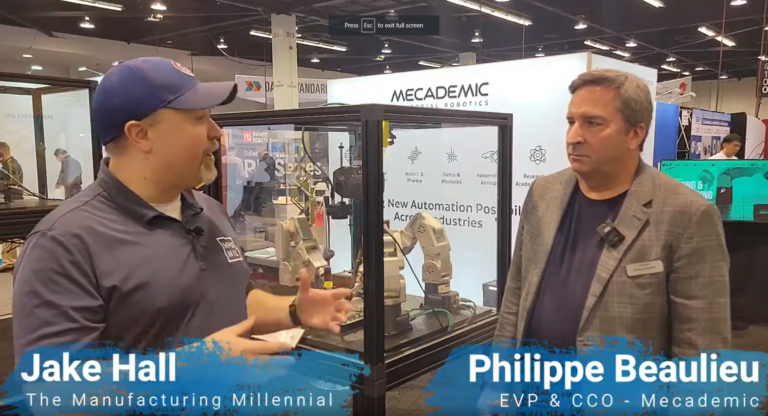
  • Interview with Jake Hall: The #ManufacturingMillenial Jake Hall interviewed our Executive VP Phillippe Beaulieu, who delved into how our innovative, small-scale robots are making giant leaps within the manufacturing industry and our commitment to providing comprehensive support for end users and integrators.

  • Control Automation Feature: Our robots were featured in a profile by EETech’s Director of Engineering, published on control.com, highlighting our innovative approach to robotics and our focus on high-precision applications. 

Addressing Critical Needs

ATX West was a crucial opportunity to connect with industry leaders and demonstrate how our robots are designed with manufacturers in mind. Every feature of our robots intentionally addresses the challenges of manufacturing automation:

  • Limited Space in Manufacturing Environments: Our compact robots with embedded controllers are designed to fit into tight spaces, enabling manufacturers to optimize their floor space without compromising on the performance and precision of their operations.
  • Need for High Precision: With the increasing complexity of manufacturing processes, especially in industries like electronics and medical devices, our robots offer the high precision required to meet stringent quality standards.
  • Efficiency and Flexibility: Our products are engineered for easy integration and flexibility, with software-agnostic programming, an intuitive interface, and multi-directional mounting possibilities, allowing for quick setup and versatility in various manufacturing tasks.
  • Operational Downtime: Our calibration service saves significant time in scenarios where a robot is displaced or replaced, ensuring minimal downtime and maintaining production flow.

More Than Robots

At Mecademic, we understand that robots are just one piece of the puzzle. Our new calibration service and optical black anodization option add additional benefits to your manufacturing applications that go beyond the robot itself:

  • Calibration Service: Our calibration service ensures that we are the most precise and accurate robots in the world, saving on downtime and improving product quality.

  • Anodized Meca500: The optical black anodized version of the Meca500 robot absorbs 96.5% of the visible light spectrum, increasing contrast for vision systems and minimizing laser reflection hazards.

The Future of Manufacturing

Participation in events like ATX West connects us with manufacturers to help them achieve new levels of efficiency and quality through our innovative and reliable robotic solutions. Our commitment to breaking down barriers to automation through our space-saving designs and unwavering precision ensures we remain at the forefront of the industry, helping manufacturers across diverse industries optimize complex operations and achieve new levels of efficiency. 

Ready to see how Mecademic can transform your manufacturing process? Contact us today, and let’s discuss your specific needs!

Categories
Blog

Photonics Industry Trends: Key Insights & Challenge

The world of photonics, encompassing the science and technology of light, is experiencing a transformative boom. From developing cutting-edge lasers for medical applications to creating ultra-fast fiber optic networks, the industry is rapidly changing how we live, work, and communicate. That’s why a couple of weeks ago, we brought our innovative robotic solutions to the biggest stage in photonics and optics: Photonics West 2024. The event presented a fantastic opportunity to showcase how Mecademic robots address the industry’s key manufacturing and scaling challenges – dealing with small and delicate parts, light reflections and space restrictions. Our goal is to expand the potential of this industry through more efficient and affordable automation solutions tailored specifically for it, establishing ourselves as key innovators in the field.

Why Photonics? The Future is Bright!

The photonics industry demonstrates a remarkable market magnitude, with one estimate showing a value of USD 900 billion in 2023. Its influence extends across a wide array of applications and sectors.

Here are five key trends that are shaping the future of the photonics industry:

1. The rise of data center communications: The demand for data is exploding, driving the need for faster and more efficient data center communications. Photonics is playing a key role in this trend, as it offers several advantages over traditional electronic communications, such as higher bandwidth and lower latency.

2. The emergence of LiDAR: LiDAR stands for Light Detection and Ranging. It’s a remote sensing method that uses light as a pulsed laser to measure variable distances to the Earth. These light pulses—combined with other data recorded by the airborne system—generate precise, three-dimensional information about the shape of the Earth and its surface characteristics. It is becoming increasingly popular in many applications, notably the rise of autonomous vehicles and robotics. Photonics plays a crucial role in LiDAR technology because it involves generating, manipulating, and detecting light. Specifically, LiDAR systems use lasers to emit light pulses, and photonics is used to manage these pulses and capture the reflected light to create detailed maps or images of the target area.

3. The growth of biophotonics: Biophotonics is the science and technology that deals with the interaction between biological tissues and photons, which are light particles. It involves the generation, detection, manipulation, and application of light in biological systems, which are used in various applications, including imaging, diagnostics, therapeutics, and monitoring of biological processes. The rapidly aging population in developed countries will continue to drive a need for this technology due to the rising incidences of chronic diseases.

4. The increasing demand for high-performance computing: High-performance computing (HPC) is used for a variety of demanding tasks, such as scientific simulations and weather forecasting. The recent surge in technologies like artificial intelligence has led to an explosion in data volumes, requiring powerful IT infrastructure. Photonics offers the speed and bandwidth that is needed for these applications.

5. The emergence of Augmented Reality (AR) and Virtual Reality (VR): Photonics plays a vital role in enabling the core functionalities of AR and VR by manipulating light to create displays, guide information, and interact with the environment, paving the way for the development of increasingly sophisticated and immersive experiences. The popular introduction of the Metaverse and the recent Apple Vision Pro signal a new era in media consumption, highlighting the growing trend of AR and VR experiences.

This increasing demand for photonics technology across industries presents a significant opportunity for us to integrate into the manufacturing automation of these devices by tackling industry-specific challenges. Mecademic focuses on and has proven experience in the following product categories:

– Industrial: Precision and scientific lasers

– Automotive (LIDAR, HUDs)

– Medical devices: Laser surgery tools

– Aerospace & Defence: Satellite communications, optical sensors

– Consumer electronics: Displays, VR Glasses/headsets

– Machines: Laser cutting, laser marking machinery

Common Challenges in the Photonics Industry: Where Automation Stumbles

Despite its exciting prospects, the photonics industry faces significant hurdles:

  • High up-front costs: According to GlobalNewswire, investing in photonics innovation can be financially daunting, with intricate processes and sophisticated equipment driving up costs. Hexapods, the current common automation choice in the industry for high-precision positioning, are bulky, expensive, and inflexible, limiting their suitability in dynamic environments and taking up precious floor space. These high upfront costs can deter investors and small to medium businesses looking to leverage this booming economy.
  • Delicate Operations: Automating the manufacturing of photonics technology is not only expensive but also very technologically challenging. Handling sensitive optical components requires robots with exceptional dexterity and minimal vibration, which traditional solutions often lack. While hexapods are common for these applications, no other current market offerings are designed for them, limiting the flexibility and possibilities for automation.
  • Light Reflection: The photonics industry often deals with delicate laser operations and measurements, which can be negatively affected by unwanted light reflections. 

These challenges often translate to slow and error-prone processes; manual alignment and handling can be time-consuming and prone to human error, impacting production efficiency and quality. Inflexible automation solutions and high costs further hinder the industry’s ability to scale production and meet growing demand. Our robots are designed to address these challenges, breaking down the barriers to efficient automation solutions.

Mecademic’s Solutions: Illuminating the Path Forward

This past January, we attended Photonics West 2024, thanks to Optonique and the Quebec Trade Office. At the event, we showcased an optical alignment demonstration featuring the Optical Black Anodized Meca500 equipped with a Percipio Robotics tulip gripper and a Thorlabs laser. Our demo showcased the unique features that tackle these exact challenges faced by the industry head-on:

  • Handle delicate operations with unmatched precision: Mecademic robots boast unmatched precision with 5-micron repeatability and 1-micron resolution, ensuring perfect alignment and handling of even the most delicate optical components.
  • Save on floorspace with a flexible and compact design: Our robots’ small size and adaptability, including upside-down mounting capabilities, allow for easy integration into diverse setups, maximizing space utilization and production line flexibility where floor space is scarce.
  • Lower the Total Cost of Ownership (TCO): The Meca500 is more affordable than its competitors because it has a lower base price and includes many features that are typically optional with other robots. These features include software-agnostic controlling, unlimited firmware upgrades, several communication protocols, and simple programming. Additionally, the Meca500 has a smaller footprint and lower power consumption than other robots, which can save on costs associated with space and energy usage.
  • Accelerate integration: Mecademic robots are software agnostic and come with an intuitive interface known as the MecaPortal. Users can control the robot without any prior robotics experience, reducing downtime and the need for highly specialized talent. 
  • Reduce light reflections: Our new Optical Black Anodized Meca500 minimizes unwanted light reflection through its specialized 96.5% light-absorbing surface, eliminating interference and ensuring accurate laser operations. 
  • Decrease noise levels: Unlike larger robots, our robots are fanless and surprisingly quiet.
  • Improve accuracy: Our new calibration service makes our robots not only the most precise in the world but also the most accurate, reducing setup time, engineering effort, and errors.

By showcasing these solutions at Photonics West 2024, we’ve presented industry leaders with the potential to:

  • Reduce production time and costs: Our competitive pricing and money-saving features help to break down the barriers to automating in this complex industry. 
  • Improve product quality: Our robots’ consistent precision and accuracy, along with the light-absorbing option, ensure better product quality and reduce the risk of defects.
  • Unlock new applications: The flexibility and accuracy of our robots enable the automation of tasks previously deemed impossible.

Looking Forward

Mecademic’s foray into the photonics industry is a strategic move driven by the immense potential for growth and innovation. By providing automation solutions that address the industry’s unique challenges, we are set to brighten the path toward a more efficient and precise future for the world of light.

Learn more about our solutions for the photonics industry.

Don’t let outdated automation hold you back. Embrace the future of light with Mecademic – Contact Us Now

Categories
Blog Product Releases

Mecademic Accelerates Microautomation with its New MicroDASH SCARA Series

Montreal, October 5, 2023–Mecademic, specialists in robots for microautomation, announces the formal launch of its new product line, the MicroDASH series, with the first shipments of its MCS500 SCARA. This innovative 4-axis robot offers unmatched space efficiency, precision, and integration flexibility to accelerate the automation of small component design, inspection, and assembly applications.

This formal launch follows the successful Early Access Program, resulting in robot design advancements and pre-orders from customers and partners across North America, Europe, and Asia.

The innovative design of the MicroDASH MCS500 offers the most miniature SCARA robot in its class. Even with an embedded controller, the MCS500 is still 30% smaller than related products. The MCS500 provides the same 0.005 mm repeatability as the Meca500 6-axis robot, offering the highest precision on the market. At just 4.3 kg, the MCS500 can also be mounted upside-down, providing integration flexibility.

“We tested the MicroDASH MCS500 extensively and immediately saw an opportunity for this robot within our micro-manipulation, pick and place, and assembly applications. We feel this robot stands apart with its compact design, reliability, and ease of integration, especially for applications that require speed and precision. It is another great product from Mecademic,” – Robert Seymour, Founder & CEO, Seymour Advanced Technologies.

This arm, crafted with robust, precision-machined aluminum housing, battery-less encoders, and high-efficiency motors, ensures enduring quality and flexible integration.

Join our Webinar on November 17: Discover the future of precision automation with the MicroDASH Series featuring the MCS500 SCARA. Register Here

About Mecademic:

Mecademic is an award-winning provider of precision automation solutions dedicated to revolutionizing industries through innovative technology and expertise. Our products and services empower companies to achieve new levels of efficiency, quality, and profitability in the era of Industry 4.0. The introduction of the MicroDASH Series with the MCS500 4-axis robot arm signifies another leap toward redefining the boundaries of micro-automation.

Media contact: [email protected]

Categories
Blog

Overcoming Microautomation Challenges: Discover the new Mecademic MicroDASH SCARA series

It is challenging to keep up in the new and rapidly evolving world of microautomation. Manufacturers, machine builders, and integrators are increasingly searching for innovative solutions to automate the handling of delicate small parts, but this is no simple task. To address this, we hosted a webinar presenting the challenges of industrial robotics for micro-applications by introducing the market to the smallest, most compact, and precise SCARA robot: the MicroDASH-MCS500.

Invited to speak as part of our panel were Stanislav Gleizer (our Director of Applications and Support) and three experts who shared their firsthand experiences with the MCS500 SCARA robot, having been part of our early access program. These include Maxence Leveziel (R&D Engineer at Percipio Robotics), Fabrizio Boriero (CEO of Nimbo SRL), and Rob Seymour (CEO of SEYMOUR Advanced Technologies).

Here are some of the key takeaways from the panel discussion.

For smooth integration, learn all there is to know about microautomation 

When integrating microautomation systems, learning everything about the new world you are working in is crucial. When the parts you are working with are below one millimeter in size, gravity is no longer the predominant force. Using components of this size leads to various challenges, such as components sticking together. 

In addition to size, tolerance is another crucial factor, especially when dealing with small parts that need to be placed in delicate spaces. The challenge lies in the small scale and the precision required for placement and alignment. There is a lot to learn, and saving time moving these parts through small and precise robots can be a significant benefit.

Consider using robots over a custom fixed automation solution

Not every application mandates the use of a robot. Nevertheless, there are considerable benefits to incorporating robots like the Meca500 and the SCARA robot into an overall portfolio, even if the application doesn’t demand four or six axes. Many customers, particularly those requiring only the basic 3-axis XYZ functionality, opt for the Meca500 robot in their applications due to the convenience of quickly sourcing the robot with short lead times and the familiarity of operating it in various applications. 

In some instances, this approach significantly reduces the amount of required mechanical engineering. While the SCARA robot might be marginally pricier than sourcing individual axes and managing controls, the time saved on engineering setup can often outweigh the additional cost, especially for microautomation applications demanding precision and delicate handling. Leveraging robots like those offered by Mecademic ensures the inherent quality of Mecademic products. Even when used only for minor tasks, opting for this comprehensive solution significantly reduces the likelihood of encountering mechanical issues and simplifies maintenance. Therefore, investing in a robot with more features than is strictly necessary can be justified by the efficiencies gained in various applications.

When designing a machine, evaluate the financial value of space 

When designing a machine, it is essential to consider the financial value of space, especially given the premium on factory space. Clean rooms, particularly in lab environments, can be costly, making small robots, like the MCS500 — the smallest and most compact SCARA robot arm in the world — more financially feasible in such spaces. The advantage of smaller robots can be seen in production lines, where multiple robots and their components come into play. Larger robots involve cumbersome logistics and adapting machines for their size. In contrast, the Mecademic approach prioritizes adapting robots to the available space.

Optimizing space consumption can even be worth millions. For example, in the automotive industry, it is common to see projects where production is cyclical, and companies build factories concerning current demand. However, unexpected demand surges can occur. The capability to maintain equivalent production levels in a confined space, eliminating the need to construct a new facility, can yield enormous savings for a company.

Consider software-agnostic robots for your next automation project

Integrators don’t just program robots; they must also ensure seamless functionality within diverse and often heterogeneous environments. Dealing with varied brands, fieldbus protocols, and communication protocols can be a daunting task for integrators. This is precisely why opting for a software-agnostic robot like the MCS500, compatible with any PLC and programming language, can be a significant advantage, cutting down deployment time for clients.

“With Mecademic robots, it’s the robot that adapts to us, not the other way around.” – Maxence Leveziel, Percipio Robotics.

By participating in our early access program, our panelists exemplified the flexibility of using a software-agnostic robot by each privileging three different ways of working with the MCS500 SCARA robot: one Allen Bradley, one Beckhoff, and one TCP/IP on a PC system. If you’re struggling with integration hassles, consider turning to software-agnostic robots.

To Wrap Up

Our panelists provided many valuable insights into overcoming automation challenges. Notably, they highlighted the importance of evaluating the cost of space, gaining specialized knowledge in microautomation, and the advantages of software-agnostic robots for integration. As we navigate the evolving landscape of microautomation, these key takeaways pave the way for more efficient, cost-effective, and adaptable solutions. 

To hear everything our expert panelists had to say, watch the full webinar recording here:

Categories
Blog

The Impact of Automation on the Global Economy

Since the beginning of the Industrial Revolution and with each new technological advancement, the question has arisen: Will machines eventually replace us? Will we know when we have gone too far?  

With the recent rise of AI technology and the push for increased automation following pandemic-induced worker shortages, these questions are again at the forefront of our minds.  But are these fears valid? Should we be hesitant about moving forward?  If history is a guide, it has demonstrated that automation has thus far greatly benefited workers and the global economy overall. 

Looking Back on Automation

Automation, which refers to the use of technology to replace human labor, has been responsible for significant changes in the workforce over the years. From the onset of the Industrial Revolution in the 19th Century, driven by steam power, to the arrival of programmable computers in the mid-20th Century, the introduction of automation has had profound societal impacts. First, people moved from their farms to cities, and later, from factories to offices.  Each of these societal shifts naturally resulted in job losses in certain fields but great gains in others. People’s knowledge and skills inevitably adapted. Few would argue that we should return to a time before this. However, fears of technological unemployment persisted throughout each of these industrial transformations. Yet, the benefits of automation prevailed.

The Case for Automation

Automation offers numerous advantages, including increased productivity, enhanced product quality, and reduced costs for both consumers and businesses. 

The advent of robotics has played a particularly important role in expanding the potential of automation, enabling more efficient, consistent, and precise execution of tasks previously handled by humans. Replacing repetitive manual tasks with automated robotic systems increases productivity and output. This doesn’t just refer to turning the wheels of capitalism faster—it also means that crucial products can be pushed out quickly to the people who rely on them and at a more affordable cost. 

Consider the case of Cretex Medical, a contract manufacturer in the medical device industry. They faced the challenge of scaling up the production of a critical component for intravascular lithotripsy (IVL) catheter devices. The manual manufacturing process, involving an assembly no larger than an eyelash, placed a significant burden on the workers. To meet the high demand for this product and improve efficiency, automating the manufacturing process became imperative for Cretex Medical. Fortunately, advancements in robotics provided a solution, enabling the automation of the micro-assembly process using the Meca500 – the world’s smallest, most compact, and precise industrial robot arm. This innovation not only increased production speed and yield but also reduced the overall footprint of the process. This meant that Cretex Medical could meet its demand, and medical providers could have quicker access to crucial equipment for their patients.

Robots’ productivity improvements are massive and scalable. For example, SDC, an engineering company that specializes in designing and building custom machinery for factory automation, increased throughput by a whopping 500% by using the same robots.

The increases in throughput enabled by automation drive the cost of goods down, enhancing the accessibility of advanced products to the public. Furthermore, by enabling machines to work continuously, automation allows human labor to be freed up for more creative endeavors, resulting in remarkable advancements across various sectors, including healthcare, logistics, and agriculture. 

Addressing Labour Shortages

The significance of automation and our reliance on it was particularly evident during the pandemic. The manufacturing industry faced significant labor shortages, causing delays in the output of essential products. This situation prompted the widespread adoption of robots to meet the increased demands and bridge the workforce gap.

Labor shortages continue to be a pressing issue in manufacturing. During a webinar organized by the Association for Advancing Automation on June 15th titled  “Smart AI Automation to Tackle Labor Shortages and Increase Productivity,” Matt Jones, the VP of US Sales and Operations for Micropsi Industries, addressed this issue. Jones cited that in February 2023, there were 750,000 unfilled manufacturing positions. Deloitte predicts that by 2030, this number will reach 2.1 million, with a trillion-dollar opportunity cost. According to Jones, this is partly due to the declining appeal of manual, monotonous factory jobs. People are now seeking more personally fulfilling positions. AI can effectively replace the repetitive aspects of these jobs, making them more attractive and opening up opportunities for more desirable positions. For example, AI in manufacturing includes predictive maintenance, which can save countless hours, up to months of time, for data analysts by identifying trends for future issues likely to arise from logs and records. 

This raises the question: if automation is replacing so many jobs, how is it possible that hundreds of thousands of unfilled manufacturing positions remain? 

Challenges to Come

It is important not to overlook the initial displacement of jobs due to automation. The World Economic Forum estimates that by 2025, automation may displace around 85 million jobs while simultaneously creating approximately 97 million new jobs. To keep up with this huge displacement of jobs, governments must implement regulations to ensure that workers receive adequate training in conjunction with technological shifts. The Organisation for Economic Co-operation and Development (OECD) predicts that by 2030, almost half of the global workforce—around 1.1 billion workers—will require significant reskilling. However, if this is done properly, the World Economic Forum predicts that investment in reskilling and upskilling the current global workforce could potentially boost the GDP by $6.5 trillion by 2030.

While the journey may not be without challenges, history has repeatedly shown that people adapt, leading society toward a more educated and advanced state. According to a report by the McKinsey Global Institute, automation technologies could potentially increase global productivity growth by 0.8 to 1.4 percent annually by 2030. So, while a significant amount of jobs will be displaced in the coming decade by the increasing use of automation, with proper investment in upskilling the workforce, the global economy could see huge benefits.

An Unimaginable Future

Imagine trying to explain to a horse and buggy owner, before the invention of cars, that their services would one day be completely obsolete. It would have been beyond their wildest imagination. They might have even feared such a future. Similarly, we cannot currently envision the types of jobs that will arise from widespread automation. But this lack of imagination should not be a cause for fear. Throughout history, technological advancements have consistently brought us benefits and improvements.  And just as it has done before, history will surely repeat itself.